

- Best Cowboy Style Leather Belt: What to Look for Beyond the Western Label - September 24, 2026
- Is a Handmade Belt Worth the Price? What You’re Really Paying For - September 15, 2026
- Best Square Toe Cowboy Boots: Which Brand Should You Buy First? - July 2, 2026
Most Tecovas reviews fall into one of two camps: the first is a buyer who got their first pair last month and can’t stop gushing. The second is a longtime boot person who is a little suspicious of anything that doesn’t have decades of heritage behind it. Neither one is particularly useful if you’re standing in the middle, trying to figure out whether $375 is a smart call or just a prettier version of a mistake you’ve already made.
I’ve owned boots in every tier of this market. This includes entry-level Justins I bought because I needed something on my feet before a horse show and didn’t have time to think, Ariats that got me through polo barn seasons without destroying my feet, and a pair of Luccheses that came as a gift and that I still have because once you’ve handled a boot built at that level, you understand exactly what you’re paying for. And now, The Annie in Sequoia Cowhide from Tecovas, which I’ve been wearing in regular rotation for a few months. A lot of boot reviews stop at first impressions. I care more about what happens after the boots have been worn for a while.
My take: After a few months in the Annie, Tecovas feels like the smartest middle-ground boot in the category: more authentic and better built than most lifestyle Ariats, much easier to justify than Lucchese, and unusually comfortable from day one. I would not call them hard-use ranch boots, and Tecovas still does not have Lucchese’s generational track record, but for daily Western wear, they are a very strong buy.
Before you even put them on
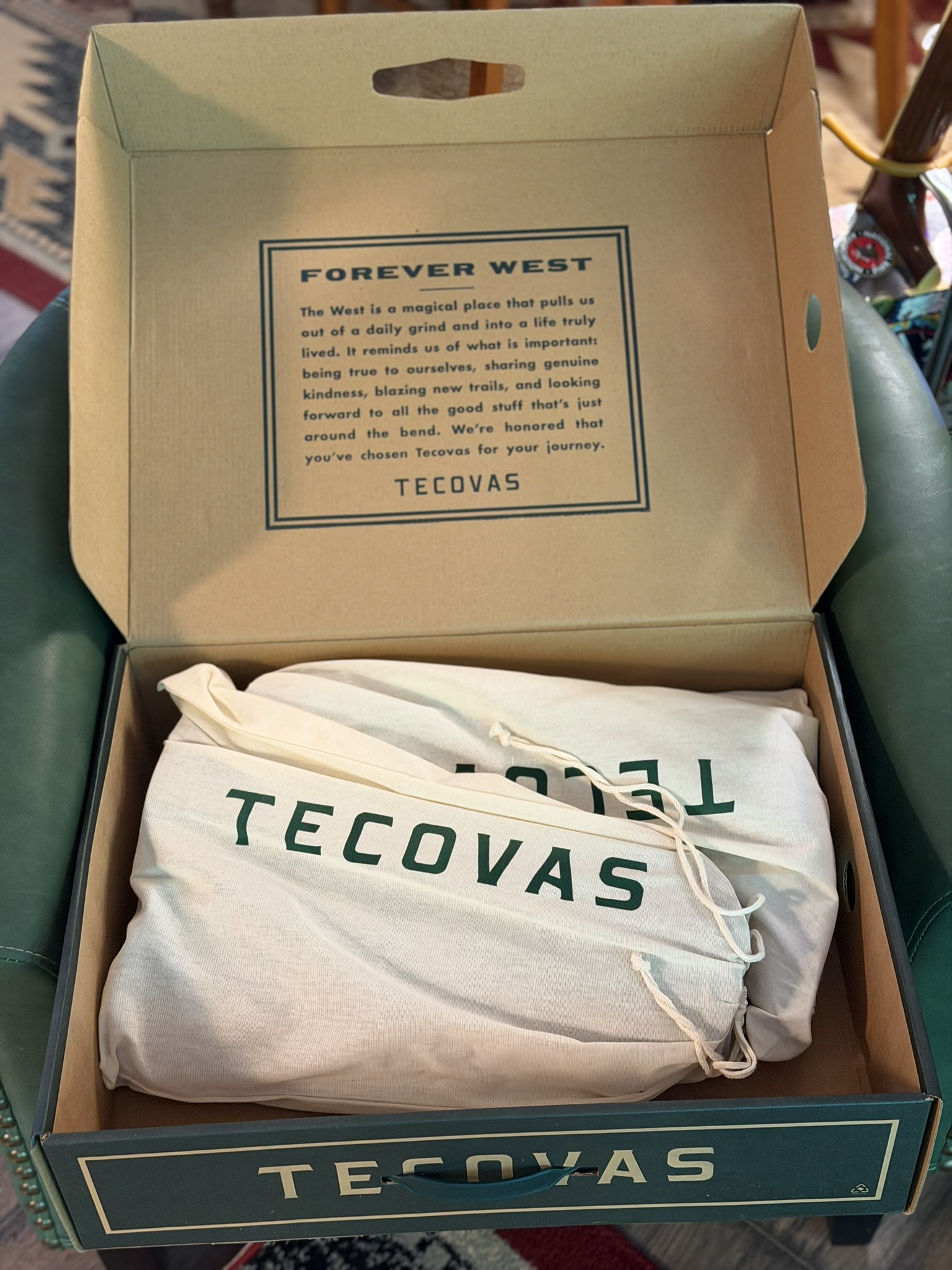
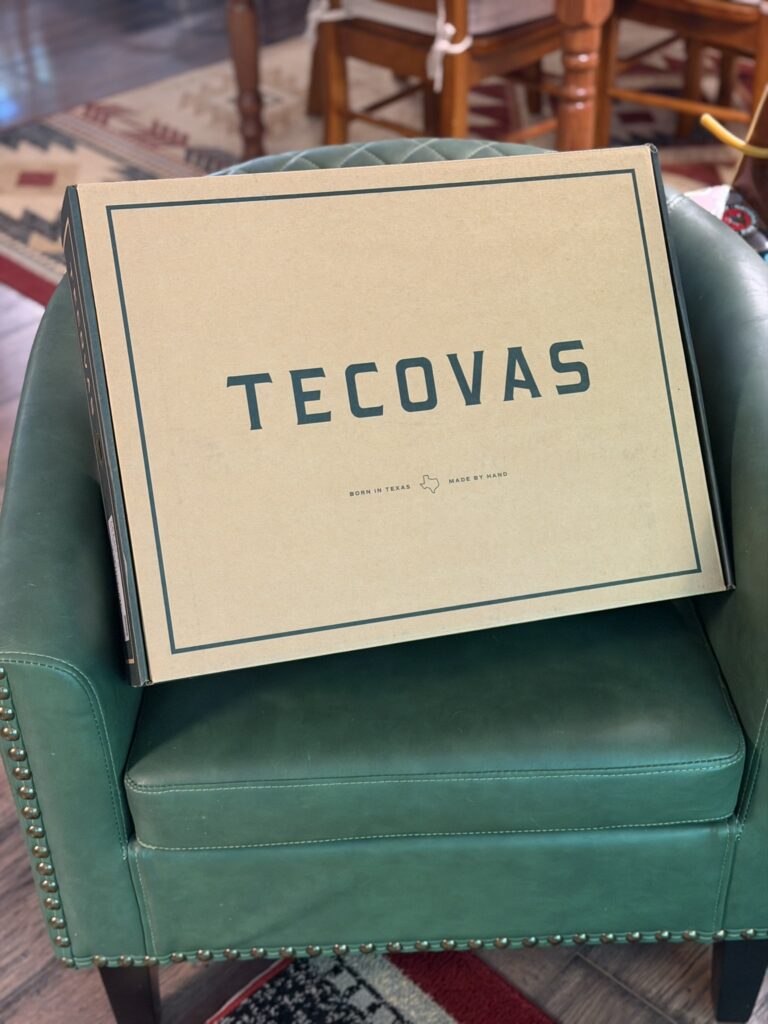
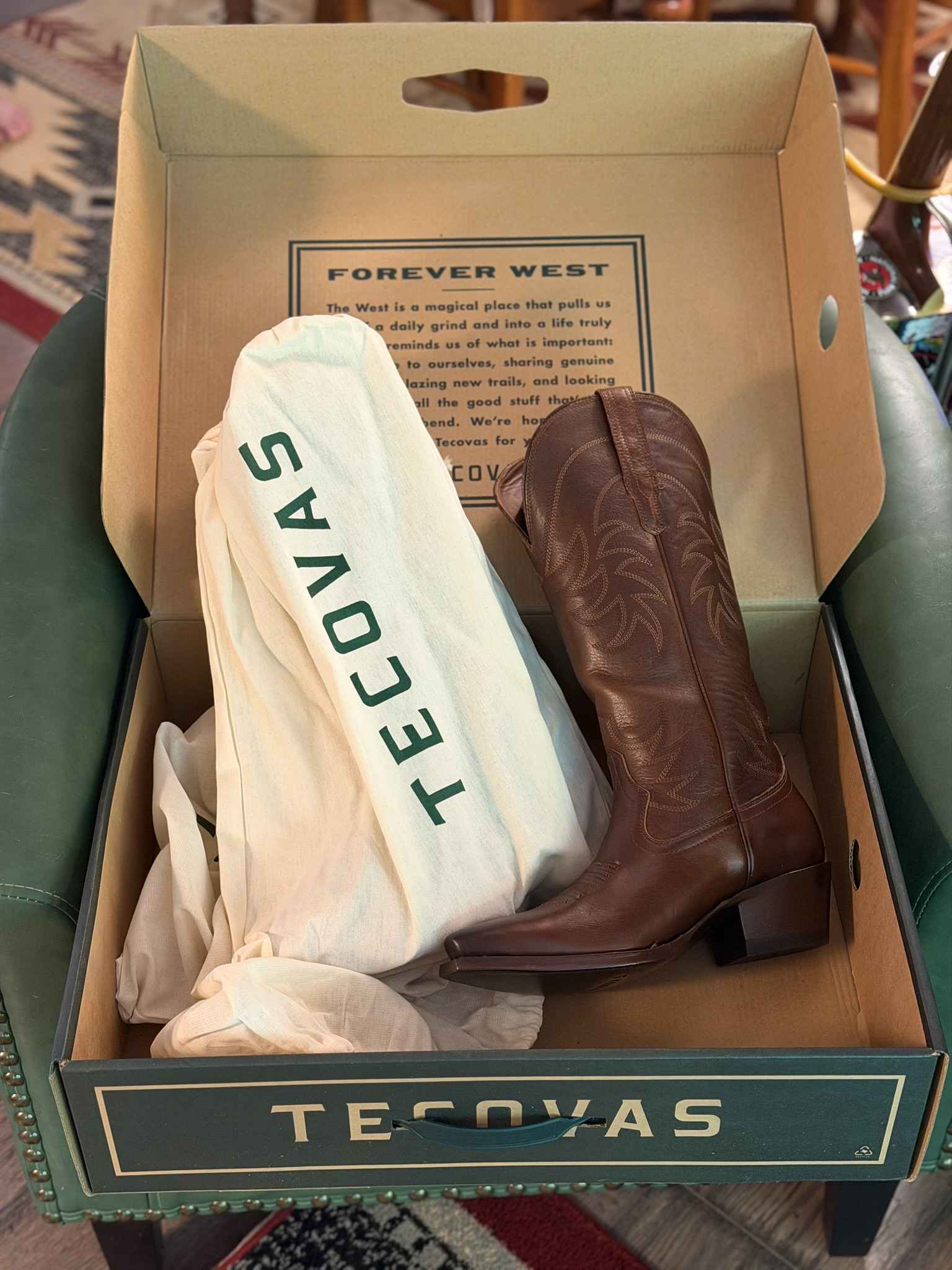
Tecovas ships in a branded boot box that feels more considered than the average mail-order experience. There are no layers of tissue paper and a handwritten note from a founder, but the packaging is clean, intentional, and structured in a way that protects the boots properly in transit. Each boot comes in its own cotton bag, which is a small thing, but it makes the unboxing feel more intentional. They don’t feel like they were just tossed in a box and shipped out.
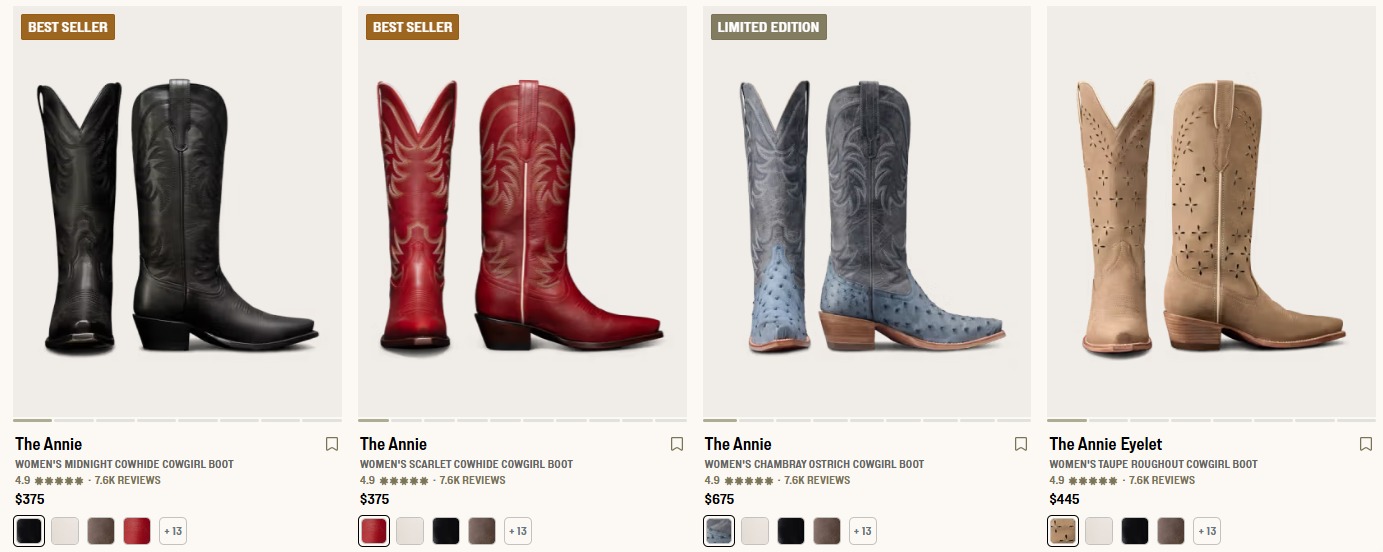
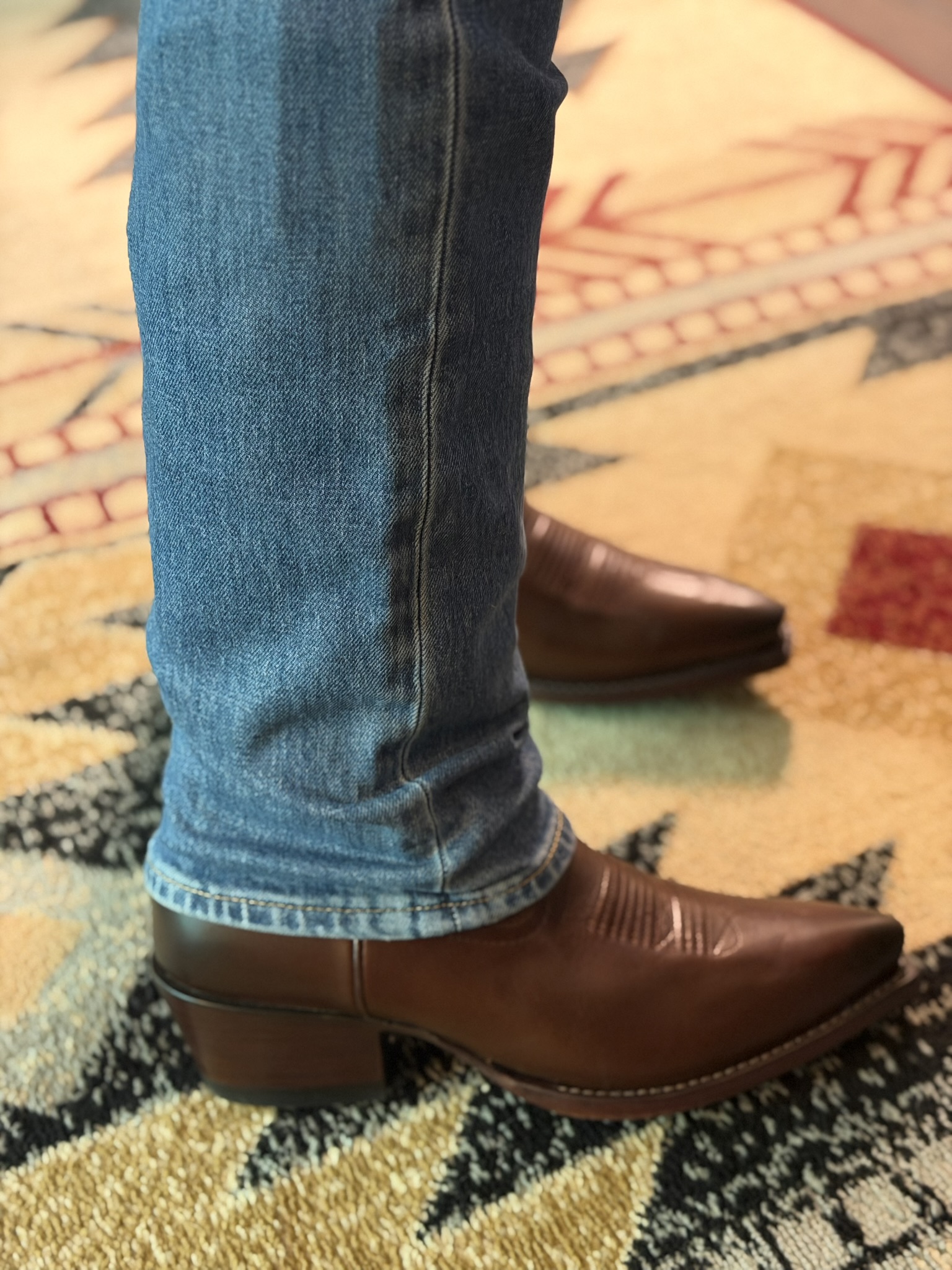
The Annie in Sequoia is a warm cognac-brown with subtle reddish undertones that shift depending on the light. Indoors it reads like a rich tobacco, and in direct sunlight it picks up depth and warmth that makes it look like a more expensive boot than it is. Tecovas is upfront that no two authentic animal hides are exactly the same. Color, texture, grain, and pattern can vary from pair to pair, and to me, that is part of the appeal. You are getting something with character, not a carbon copy of what everyone else is wearing.
The natural grain variation in the cowhide is part of what makes the Sequoia leather interesting to look at, and the seven-row tonal stitching running the full length of the 14-inch shaft is subtle and decorative without competing with the leather itself. The deep scallop at the topline, where the shaft dips gracefully at both the front and back, is one of the details that makes the Annie look considered rather than generic.
First Wear
I put the Annies on the day they arrived and wore them for a full day without any kind of preparation: no conditioning, no mink oil, no strategic thick socks. That was deliberate. I wanted to know what the out-of-the-box experience was actually like, not what it was like after I had spent half an hour trying to make them easier to wear.
And it was not a light little “walk around the house” test. My first day in them started with the usual 7 a.m. milking, followed by fence mending, a rotation out through the woods to scope new pasture, and then an unexpected jailbreak from my sneaky old mare who decided she needed to take herself for a spin down by the neighbor’s place. So the boots got hay, mud, uneven ground, chores, walking, bending, and a little unplanned horse recovery all on day one.
That was the part I expected to feel first. With a snip toe and a taller Western shaft, I figured there would be at least a little rubbing somewhere: maybe the heel, maybe across the top of the foot, maybe right where the toe bends. But I didn’t get any of that. No blisters, no hot spots, no pinching. The Annie has a sharper, more polished shape than a round-toe boot, so I expected some kind of break-in. It just never really happened.
The heel fit was snug without being tight, which is exactly what I want in a Western boot, and the shaft did not have that stiff, awkward break-in feeling that usually has you walking carefully for the first few wears. The two-inch leather-wrapped heel placed my weight correctly over the ball of my foot without pulling on my Achilles, and by the end of the day, I still was not looking for a reason to take them off.
For context, I have worn Lucchese boots that cost twice as much and still required three weeks of careful breaking in before I could comfortably wear them for a full day. I have also worn Ariats that felt comfortable right away, but in a more manufactured way. They are comfortable because the padding, cushioning, and athletic construction are doing the work, not because the leather is naturally settling around your foot.
That is not necessarily a bad thing, especially if you want something closer to a work boot or riding boot with sneaker-like support. But they can feel a step removed from the old-school leather boot experience: more engineered and built for immediate function than for that natural give-and-take you get when good leather starts to shape itself to you.
The Tecovas felt different from both. They had the ease of a boot that had already softened a little, but still had the structure, shape, and freshness of something new. That is not typical at this price, and in my experience, it is not always typical at twice this price.
The Annie has a lot of strong reviews on the Tecovas site, and the thing people seem to mention over and over is how comfortable they are right out of the box. After wearing mine for a full day the same day they arrived, I get it.
After a Few Months of Regular Wear
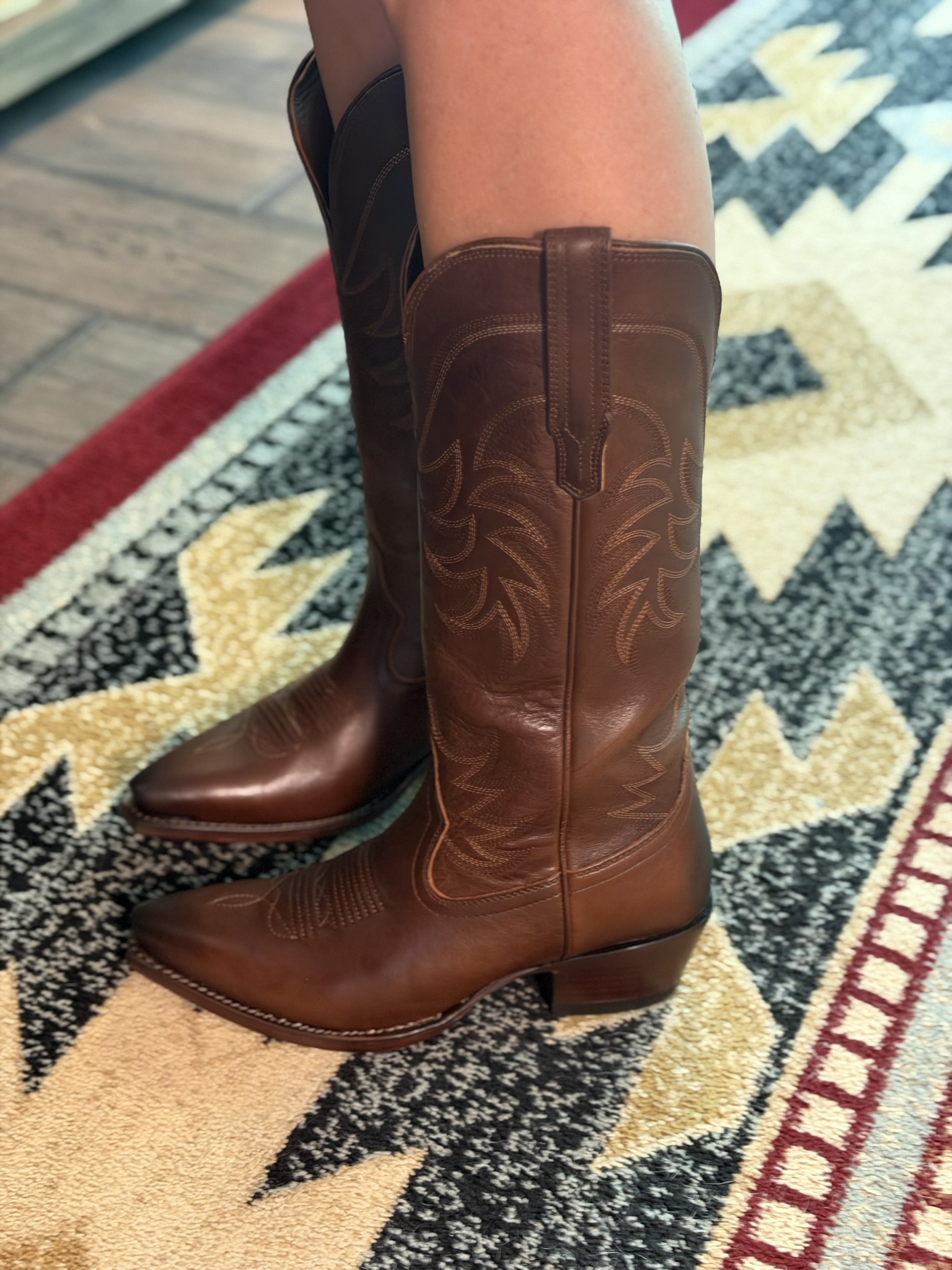
I wear the Annies the way you wear a boot you actually trust: regularly, without packing extra socks or Band-Aids, in weather that ranges from dry and cold to wet and muddy. Jeans and a jacket to run errands, worn-in denim to a night out, barn pants on days when I’m back around horses. They have done all of it without complaint.
After a few months, the leather has started to soften in the places you’d expect. The toe and heel counter have picked up a little more warmth in color, and the stitching on the shaft still looks clean. I haven’t seen any pulling, loose threads, or seams starting to work themselves open.
The outsole shows normal wear, but nothing that made me think, “That’s happening too fast.” What I’ve noticed more than anything is that the boots still hold their shape. The vamp has creased some, because of course it has, but it hasn’t collapsed. The shaft still stands the way it should, and the whole boot still looks like the same boot I pulled out of the box. That matters to me, because I’ve had softer or cheaper boots start looking tired pretty quickly once they were in regular rotation. These haven’t done that.
The build is a big part of why they feel different. These are not just pretty boots with a Western silhouette. The Annie has a 3/4 Goodyear welt, a replaceable stacked leather heel, cork under the footbed, and lemonwood pegs securing the leather midsole. Those details matter because they affect how the boot wears, how it breaks in, and whether it can be repaired instead of tossed. It feels substantial from the first wear, not hollow or costume-y.
The thing that genuinely made me do a double take when I first handled these was the leather quality relative to the price. I expected something that looked good on a website and felt ordinary in person. The hide has real weight to it, real character in the grain, and a surface finish that doesn’t feel like it’s been processed into uniformity. That is not something you see at $375…I expected the leather to feel thinner at this price. It doesn’t.
The versatility has also been a genuine surprise. The Sequoia Cowhide goes with almost everything: dark denim, a simple dress, barn pants, a blazer. The tonal stitching keeps the boot from reading as too decorative, and the snip toe gives it a slightly more polished silhouette than a classic round-toe Western boot. It works dressed up on date night and it works for a casual drink after putting up hay all day, which is harder to pull off than it sounds in a boot with a 14-inch shaft.
A Note On The Quality Consistency Complaints
Spend enough time in this category and you will hear quality consistency concerns about Tecovas: stitching that puckers on a shaft, leather finish that varies between pairs of the same colorway, the occasional fit that doesn’t quite match what someone ordered in a different style. These are legitimate things to know going in.
The concerns that come up most often fall into a few patterns. Some buyers have experienced structural issues in the first year, things like a heel counter losing shape or a heel cap rubber beginning to lift. Color fading on darker leathers has come up, particularly in the shaft. And some people find the sizing inconsistent across different Tecovas styles, so a size that fits perfectly in one boot doesn’t necessarily translate to another. On the warranty side, Tecovas takes a fairly strict approach when damage is attributed to wear and water rather than a manufacturing defect, and a few buyers have found that process less flexible than they expected given the price point.
With my pair, I haven’t run into any of the bigger issues people sometimes mention. After a few months of regular wear, the stitching is still tight, the heel feels solid, the color has stayed even, and the fit has been right since the first day.
I do think it’s fair to expect a little variation with handmade boots, especially with real leather. One pair might have more grain, a slightly different tone, or a little more character than another. That does not bother me. What would bother me is sloppy stitching, a loose heel, uneven construction, or a pair that feels noticeably different from what you ordered.
I haven’t seen any of that with the Annie. For a first pair, I’d probably stay with one of the core cowhide colors, take the sizing seriously, and try them on indoors before committing. Tecovas gives you 30 days and free exchanges, so I’d use that window the way it’s intended if the fit or finish feels off.
How Tecovas Compares Against Ariat and Lucchese
The Ariats I had were in that $180 to $200 range, and they started feeling cheaper pretty quickly. The leather was thinner, more processed, and once it creased, it stayed creased. The sole also had that thicker synthetic feel, which is practical, but it never gave me the same feeling as a traditional leather Western boot.
That does not mean I dislike Ariat. I’ve worn Ariats in barns and around horses, and for certain days, they are the better choice. If I know I’m going to be on my feet constantly, walking miles out to catch horses, dealing with wet ground, or doing the kind of work where comfort and traction matter more than how the leather ages, Ariat makes sense. They are easy to wear and built more like a performance boot.
But the pair I had did not feel like something I’d reach for because I loved the leather, the shape, or the way they were going to wear in over time. Tecovas feels different there. It feels more like a real leather boot I want to keep wearing in, not just wear out.
Lucchese is a tougher comparison. My Luccheses were a gift, and I know what they’d cost to replace now, north of $600 and climbing fast once you get into the Classic line. The construction, the leather, the way they age, it’s all at a different level. I also say that knowing how brutal the break-in can be on certain pairs. For someone who wants a boot they’ll wear for twenty years, resole, and maybe hand down someday, Lucchese still makes sense.
At $375, Tecovas gets closer to that higher-end feel than I expected. The leather on the Annie is better than what I’ve seen from Ariat at a similar price, and while I would not put it fully in Lucchese territory, it does not feel far off in daily wear. The Goodyear welt and replaceable stacked heel are details I usually associate with more expensive boots. Same with the León construction. These do not feel like boots made to look Western from a distance. They feel like real leather boots made by people who understand the category.
The one thing I can’t tell you is what these boots look like after ten or fifteen years, because Tecovas has not been around as long as Lucchese. That matters if you’re buying a true lifetime boot. After a few months, I can speak to the leather, the fit, the stitching, the outsole wear, and how they’ve held their shape. All of that has been strong. What I can’t do yet is pretend they have the same generational proof behind them.
Who This Boot Is Actually For
The buyer the Annie is built for is not trying to impress someone at a working ranch, and these are not boots for a polo groom who needs grip on a wet wash rack at 6 a.m. They are boots for someone who wants to wear a real Western boot, made by people who know what they’re doing, without spending over $600 to get there or spending three weeks suffering through a break-in period that makes you question your life choices every morning.
That is a larger market than the traditional Western boot industry ever really served well. Most of what existed before was either cheap and obvious or expensive and intimidating, and the Annie sits in the space in between in a way that doesn’t feel like a compromise on either end. The tonal stitching and snip toe give it enough polish to work in rooms where a more heavily decorated Western boot would look out of place, and the Sequoia colorway is warm and versatile enough that it disappears into an outfit rather than defining it. That is a harder thing to pull off than it looks in a tall Western boot.
The Bottom Line
I went into this purchase with the specific skepticism of someone who has been burned before and knows what the right thing feels like when you have it. After a few months of regular rotation, my honest verdict is that Tecovas earns its place in this conversation.
The leather feels better than I expected at this price, and the construction details are not just for show. The Goodyear welt, stacked heel, cork footbed, and lemonwood pegs all matter because they affect how the boot wears and whether it can be repaired later. Add in the fact that they were comfortable on day one, and the $375 price feels pretty easy to justify.
I’d still save for Lucchese if I wanted a true investment pair and knew I was going to keep them for decades. I’d still grab Ariat for long, wet, messy barn days where I’m walking miles and care more about traction than leather character. But for the boot I’d actually reach for most days, Tecovas is the easiest recommendation. The Annie looks right, feels good immediately, and gives you enough real bootmaking detail that the price makes sense. I’d recommend it to someone buying their first real Western boot, and I’d also recommend it to someone who already owns boots but does not want to spend Lucchese money on a daily pair.