

- Best Cowboy Style Leather Belt: What to Look for Beyond the Western Label - September 24, 2026
- Is a Handmade Belt Worth the Price? What You’re Really Paying For - September 15, 2026
- Best Square Toe Cowboy Boots: Which Brand Should You Buy First? - July 2, 2026
- Start With What the Belt Is Made From
- Construction Tells You Where a Belt May Fail
- Do Not Overlook the Buckle
- Handmade Should Come With Something You Can Inspect
- What I Found in Two $125 Zilker Belts
- A Quick Red-Flag Checklist
- Compare Cost Per Year, Not Just Sticker Price
- When Spending More on a Handmade Belt Makes Sense
I never thought of belts as something to spend much money on. I bought one that matched my boots, wore it until the surface cracked or the hole I used most started tearing, then bought another. After enough rounds of that, I started wondering whether I was actually saving money by always buying the cheaper belt.
I grew up riding horses and working in barns, played polo in college, and still spend a lot of time around horses, so mine get more abuse than a belt that comes out for dinner a few times a month. Recently, I bought two handmade belts that cost quite a bit more than I normally would have spent and started wearing them the same way I wear everything else. I could tell pretty quickly that they felt different from the cheaper belts I was used to, which made me want to figure out what I was actually paying for and which of those differences were likely to hold up over time.
Start With What the Belt Is Made From
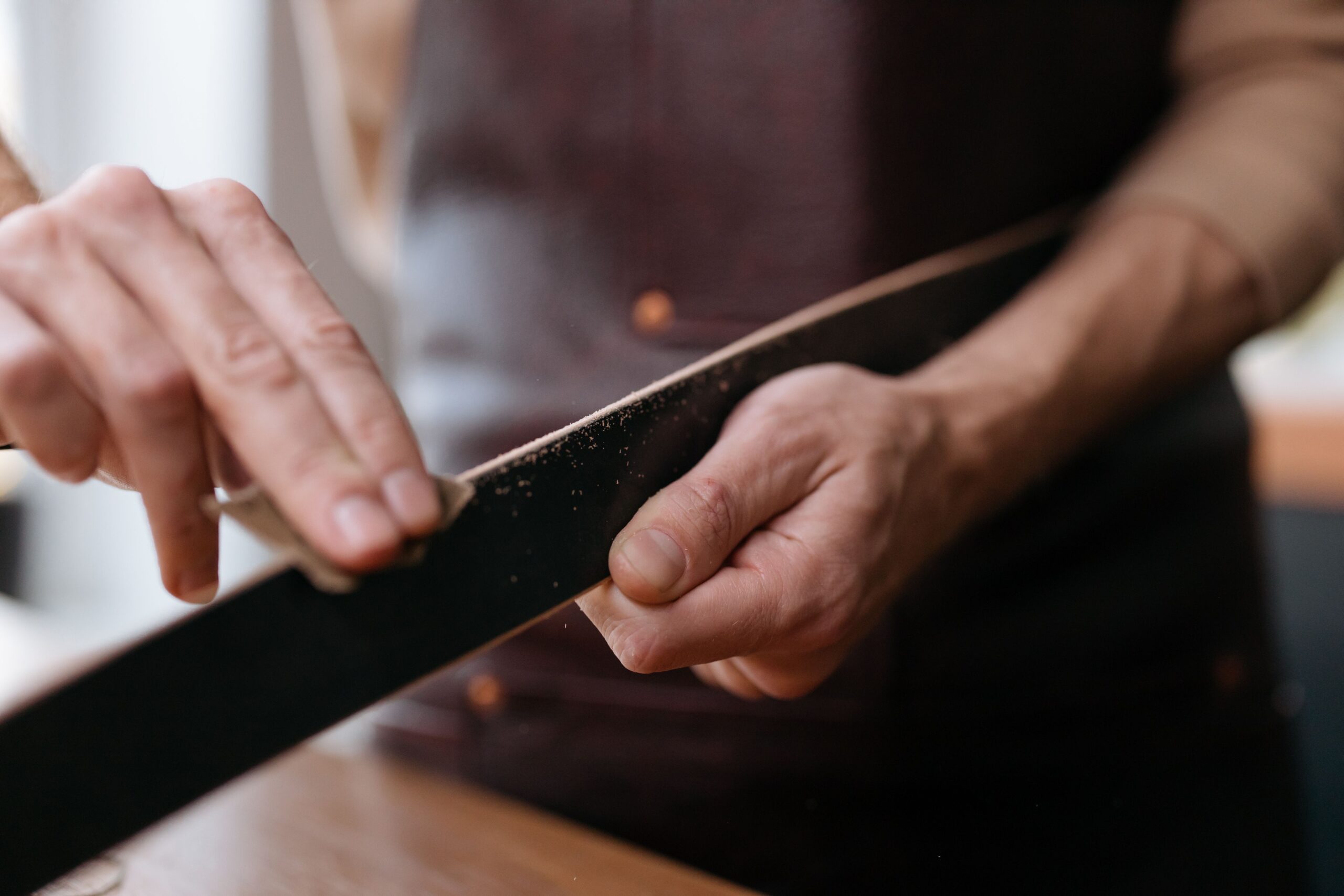
“Leather” is too broad a word to tell you much by itself. Two belts can both use it on the product page and still be made from very different materials, so knowing a handful of common terms helps when you are trying to figure out what you are paying for.
- Full-grain leather: Uses the outer grain layer of the hide with the surface left largely intact. It tends to show more natural variation and can soften and develop character with wear.
- Top-grain leather: Also comes from the upper portion of the hide, but the surface is typically sanded, corrected, or finished to create a more uniform appearance.
- Split leather: Comes from a lower layer of the hide after it has been separated from the top grain. It may be coated or finished to create a smoother surface.
- Bonded leather: Uses leather fibers or scraps combined with binders and formed into a sheet rather than one continuous piece of hide.
- Synthetic or faux leather: Usually uses materials such as polyurethane rather than animal hide. Some belts combine fabric, synthetics, and leather within the same construction.
“Genuine leather” tells you less than you’d think. It indicates leather is present, but it does not tell you much about where it came from within the hide, how the belt was constructed, or the quality of the finishing. On a belt priced above $100, I would want a more specific description of the materials.
If you can shop in person, look beyond the finished front of the belt. Check the backside and cut edge, flex the area around the holes, and notice how much structure the strap has. A very thin belt may stretch faster under regular tension, while an extremely thick one can be awkward if it barely fits through your belt loops or feels stiff when you sit in the saddle.
The surface can give you another clue. Leather will naturally soften, crease, and pick up marks as it is worn; a coating that begins peeling away is a different kind of wear. I have owned an inexpensive belt that looked like leather when I bought it, then started shedding its surface around the holes within a couple of months. It continued fastening for a while, but the damage kept spreading until the area around the hole started failing too.
Construction Tells You Where a Belt May Fail

Belts usually wear out in a few predictable areas rather than evenly from end to end. The favorite buckle hole stretches, the strap takes a sharp bend where it feeds through the buckle, an edge starts to separate, or the section securing the hardware loosens.
The holes take concentrated tension every time you wear the belt, and most people use the same one repeatedly. Over time, a weaker hole can stretch from a circle into an oval and start tearing toward the next one. On a new belt, look for holes that are cleanly cut with enough material around them rather than edges that already appear thin, rough, or distorted.
Then turn the belt sideways and look at the edges. A belt made from one main piece of leather and one made from several layers can both hold up well, but layered construction gives you another area to inspect. Gaps between layers, lifting edges, or exposed adhesive before much wear are all reasons to look closer.
Stitching should also stay secure through the parts of the belt that repeatedly bend or rub against loops. Decorative stitching does not necessarily hold the belt together, but thread that is already loose can still snag and unravel. Structural stitching around attachment points has an even harder job, so the backside of the belt can be just as informative as the decorative surface.
For riders, these areas see plenty of repetition. Sitting in a saddle, bending to pick feet, carrying buckets, climbing into a truck, and leaning over gates all put the belt through the same movements over and over. A weak point that might take longer to show up on an occasional dress belt gets a much quicker workout around a barn.
Do Not Overlook the Buckle
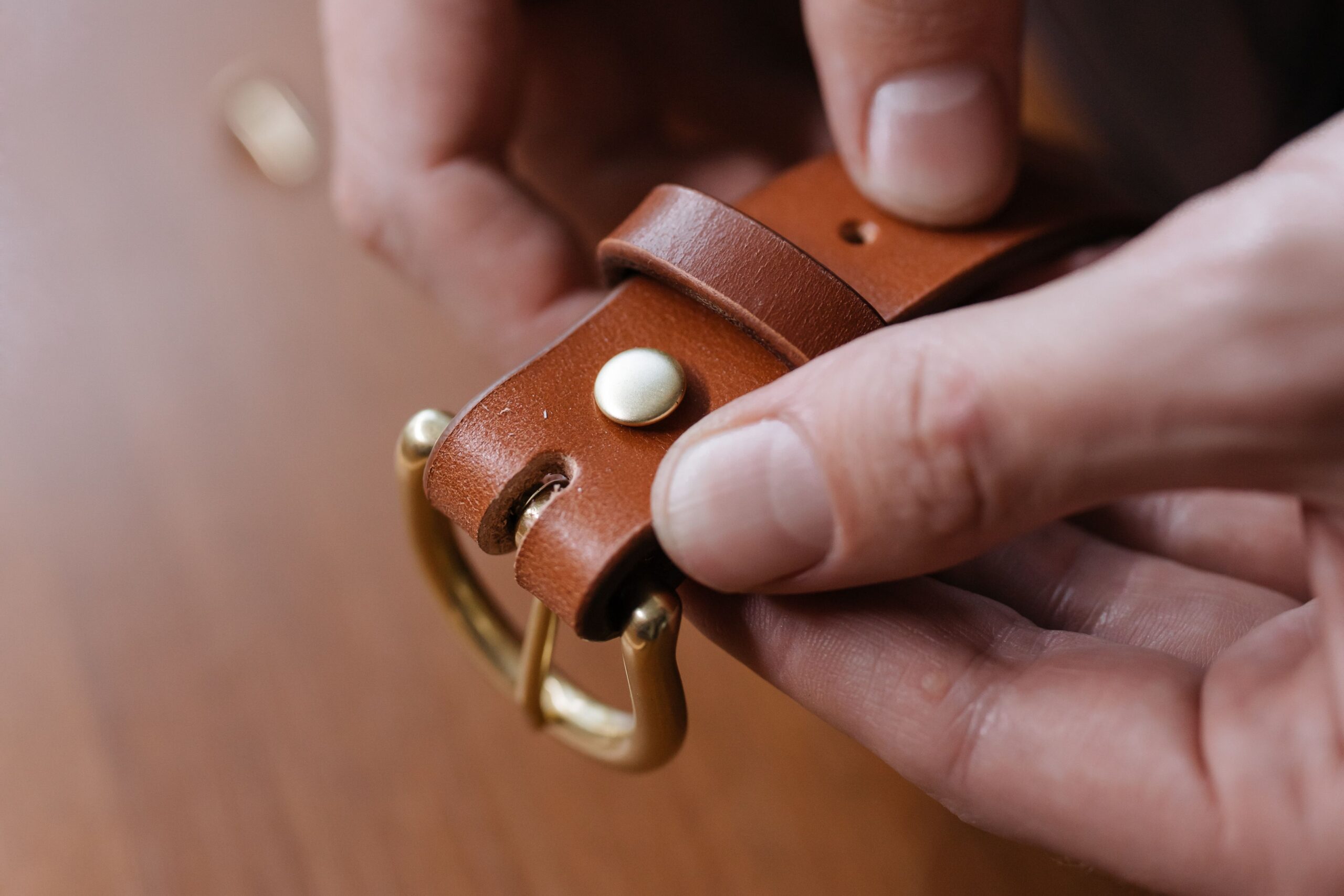
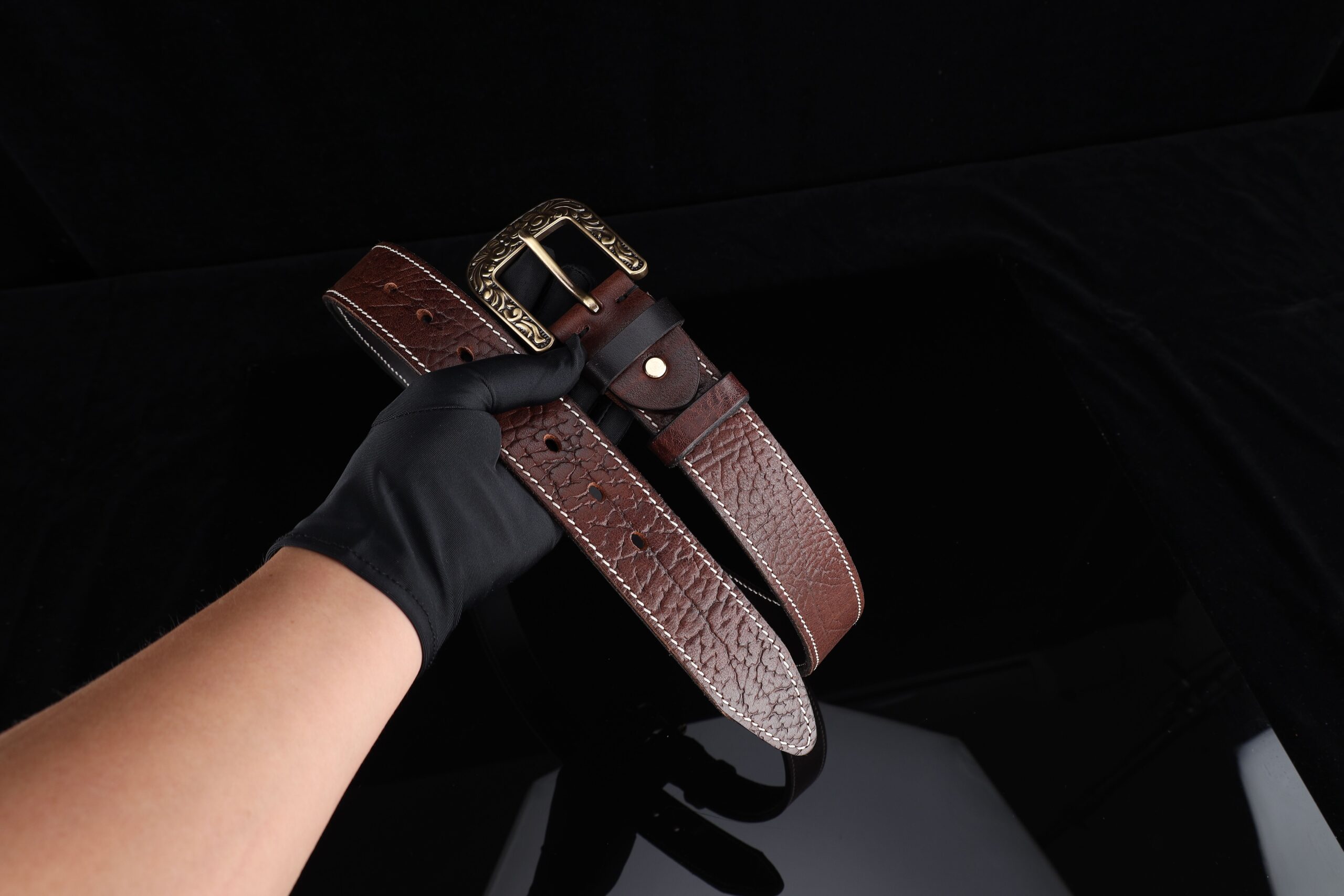
A beautifully made leather strap can still be frustrating if the hardware feels cheap or digs into you. Work the buckle through its normal range and see whether it moves smoothly, then check the hinge and the point where the hardware attaches to the strap.
Weight is only one piece of it. Some good hardware is intentionally light, while a heavy buckle is not automatically better. What you want is hardware that feels appropriate for the strap and does not seem flimsy next to the leather holding it.
Shape starts to count once the belt has been on for several hours. Sharp corners and bulky hardware may feel fine while you stand in front of a mirror, then press directly into your stomach every time you sit or bend forward. Riders have a particularly easy way to test this: sit down in the belt and lean forward as you would in the saddle rather than deciding how comfortable it is while standing upright.
The attachment method is also an important area to evaluate, especially if you already own Western, trophy, or vintage buckles. A removable buckle allows you to keep using the same strap with different hardware, whereas a permanently attached buckle limits you to the original setup. Even if you never plan to swap yours, check the screws, snaps, stitching, or other connections holding the buckle in place because that small area absorbs quite a bit of pulling and folding.
Handmade Should Come With Something You Can Inspect
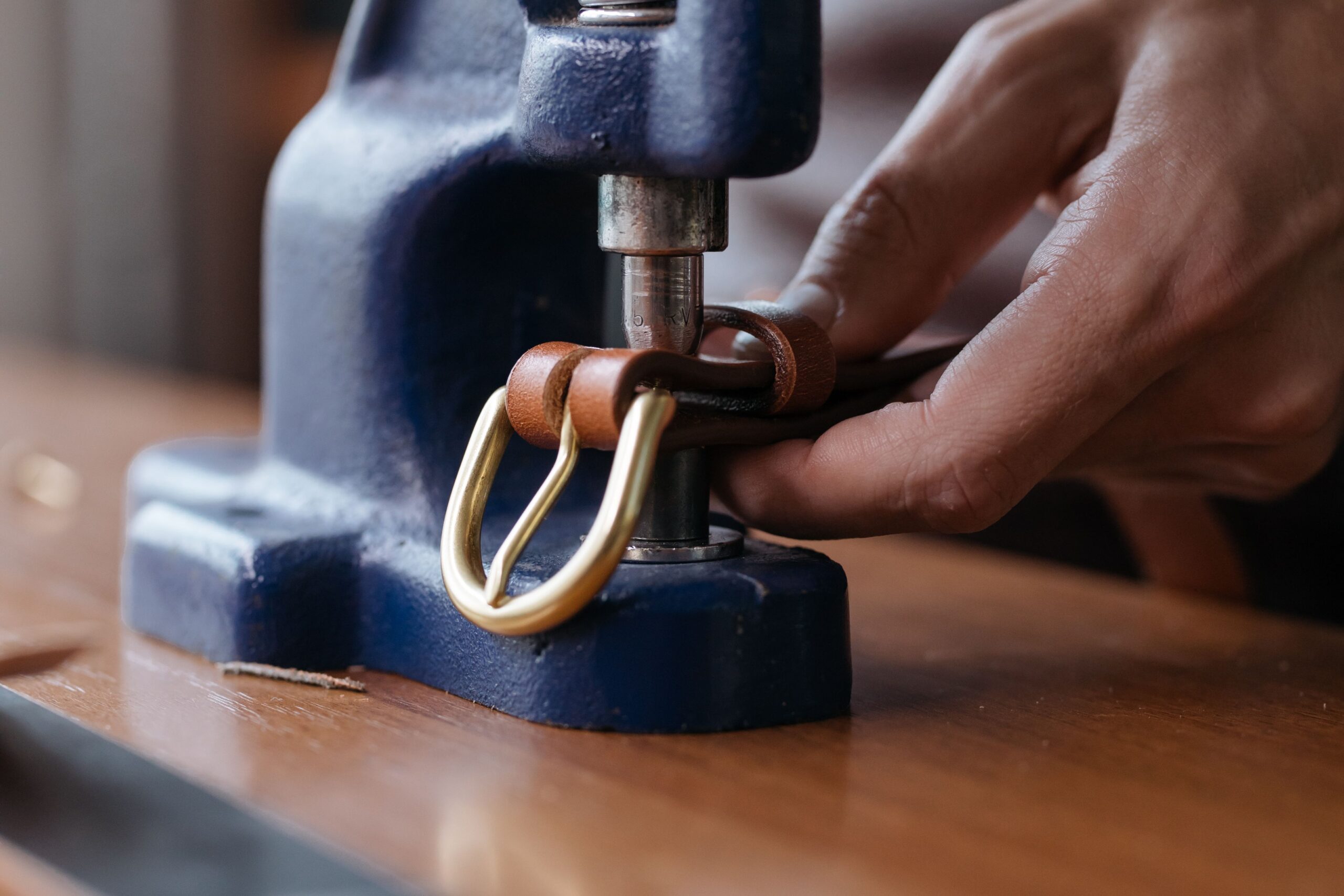
“Handmade” can account for more labor in the price, but the word itself does not guarantee careful work. If a belt costs more because someone stitched, tooled, embroidered, or finished part of it by hand, look closely at the work rather than stopping at the label.
Follow the stitching for a few inches and see whether the thread is properly secured. Look around holes, curves, and edges where the work becomes a little harder to execute cleanly. Small variations can be part of an item made by hand, while loose thread, missed areas, or poorly finished edges are separate issues.
The same approach works with tooling and embroidery. An elaborate design may represent hours of work, but it will also be dragged through belt loops repeatedly, so decorative elements need to be secure enough for normal use. With hand-stitched belts, the thread may also become part of the design itself, which lets you inspect the workmanship before you buy rather than relying on the manufacturer’s description of the process.
What I Found in Two $125 Zilker Belts
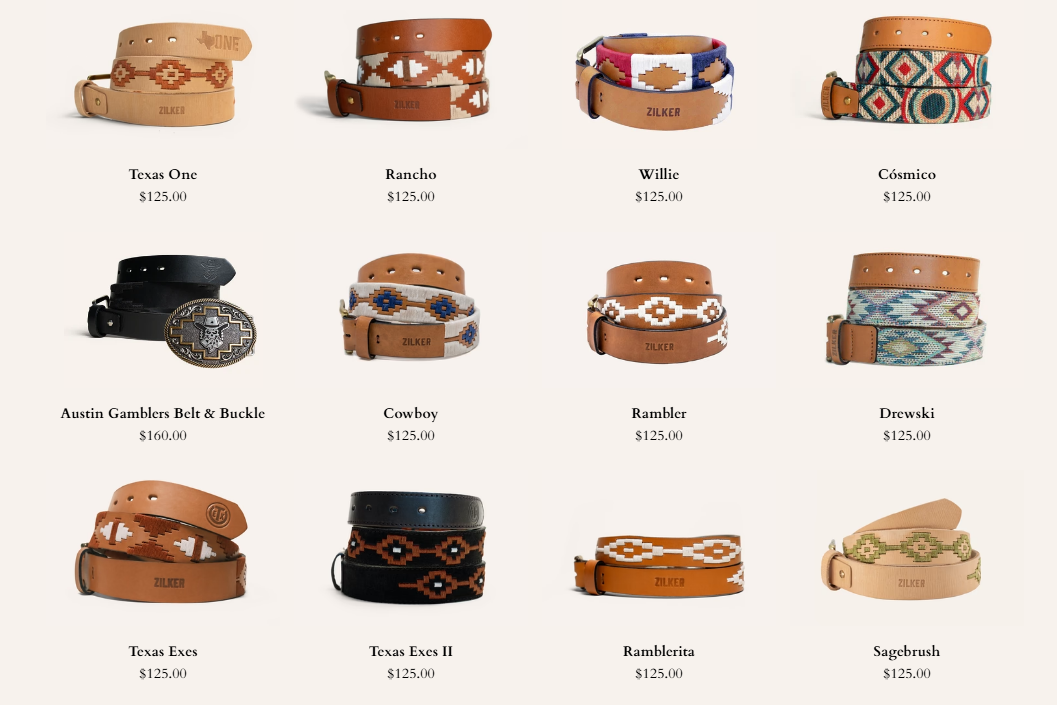
When I started looking into Zilker Belts, the Argentina connection was one of the first things I wanted to understand. The company was started more than a decade ago by two lifelong friends who brought the look of traditional Argentine gaucho belts back to Austin, with many styles still hand-stitched in Buenos Aires. I have been to Argentina, watched polo at Palermo, and spent enough time around horses and gaucho culture there that the style felt familiar, so reading the company history helped connect the dots between that influence and the colorful stitching I was seeing in the belts.
The Drewski is the belt that got me shopping in the first place. I liked the colorful woven fabric and stitching because it looked nothing like the brown leather belts already hanging in my closet, but I also wanted one I knew I would wear easily with jeans and boots, so I ordered the Rancho too. Both were $125, and I was ready to see what you really get by moving into this price range.
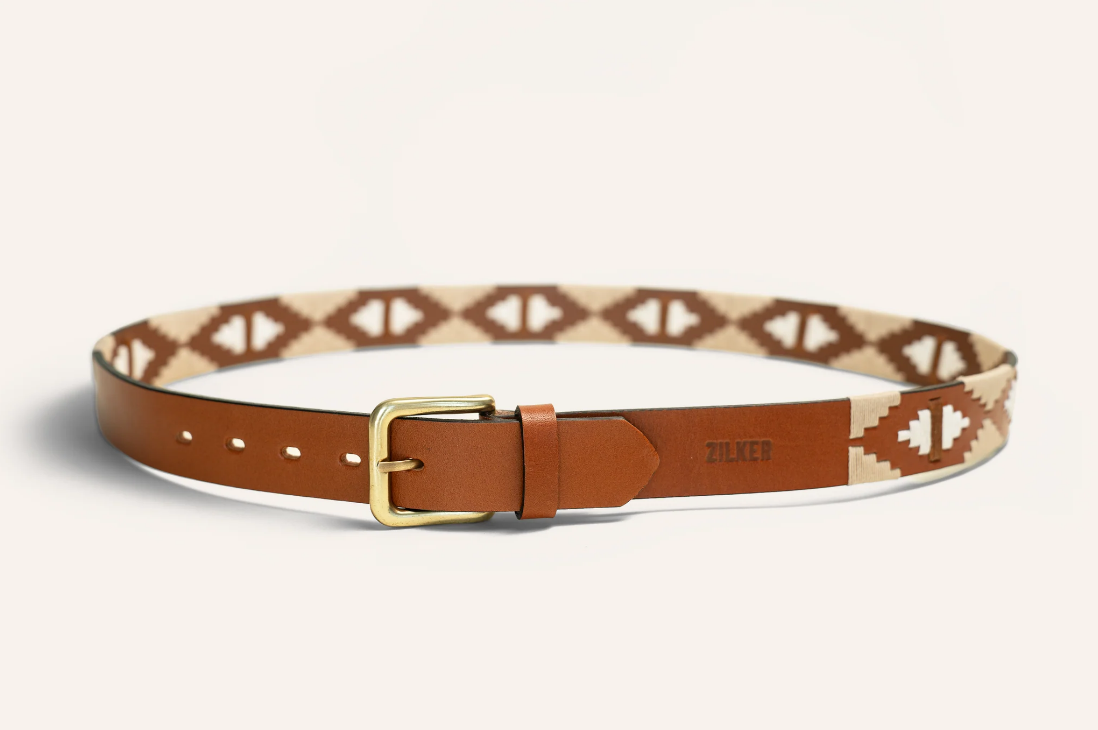
The Rancho uses full-grain leather and felt heavier in my hand than the inexpensive belts I was used to. It was pretty stiff when I first took it out of the package, but after wearing it for a day, it was already starting to soften around my waist while the strap still held its shape.
The Drewski is made differently, with Argentine fabric backed by Argentine leather. The fabric and stitching are what made me want this one in the first place, and in person the color and texture have a lot more depth than they did in photos. Up close, you can really appreciate the intricate stitching and the amount of handwork that goes into the fabric and leather.
The buckles were another thing I noticed once I started wearing them. They have some weight to them, but not enough that I feel them pulling on my pants, and the edges are smooth enough that I have not had one digging into my stomach when I bend over. Both are removable, which I like because I can swap in another buckle later if I want to.
I have not owned either belt long enough to say how it will look in five or ten years, but so far, the Rancho is already breaking in without feeling loose, the Drewski stitching has stayed put, and neither buckle has given me anything to complain about.
A Quick Red-Flag Checklist
By this point, checking a belt in a store does not need to turn into a 20-minute inspection. Here are a few things to keep an eye out for:
- Vague materials: A higher-priced belt that only says “leather” gives you very little information about what was actually used.
- Peeling or separating edges: Look for coatings lifting, layers pulling apart, or adhesive already becoming visible.
- Thin or ragged holes: The hole you use every day takes concentrated stress, so poor cutting or very little material around it can become a problem.
- Loose stitching: Thread already pulling free before the belt has been worn has plenty of chances to snag as it passes through belt loops.
- Loose or rough hardware: Check the buckle movement and the attachment point rather than assuming the metal will last as long as the strap.
Shopping online makes some of these checks harder, so look for photos that show the edge, backside, holes, and buckle attachment. Also check the return or exchange policy in case the material, construction, or overall quality is different from the product pictured or described.
Compare Cost Per Year, Not Just Sticker Price
A cheap belt stops being cheap if you keep replacing it. If you spend $30 on a new belt every year, five years costs $150. A $125 belt that stays in service for those same five years comes out to $25 per year, with the break-even point arriving a little after year four. If it lasted ten years, the purchase price would average $12.50 per year.
This is also why I prefer cost per year to obsessing over cost per wear. A belt worn around a barn might be put on hundreds of times, while a dress belt may come out six times a year. Tracking every wear does not add much; knowing that you have replaced the same type of belt three times in five years does.
There is also a gray area between a belt being broken and being dependable. A strap may still fasten after the coating starts peeling or a hole begins stretching, but if you are checking it every morning because you aren’t sure how much longer it has, you are already shopping for its replacement.
Style can factor into the price too. A belt that lasts 15 years but stays in the closet because you do not enjoy wearing it was not necessarily a smart purchase. Someone who likes tooling, embroidery, colorful hand-stitching, or being able to use a favorite Western buckle may reasonably pay for those details, while someone who needs a plain black belt twice a year probably has little reason to spend $125.
When Spending More on a Handmade Belt Makes Sense
If you keep replacing inexpensive belts because the coating peels, the holes tear, or the hardware starts giving out, the math can start to work in favor of spending more upfront. There is also value in having a belt you can depend on. I do not want to be halfway through a day at the barn wondering whether the hole is going to hold or whether I am about to be reaching for baler twine.
After wearing a few Zilker belts in this handmade category, the price makes more sense to me than it did when I first started shopping. The Rancho has the heavier leather feel I wanted, while the Drewski gives me the color and handwork I was drawn to in the first place. Both feel like a noticeable step up from the cheaper belts I was used to buying. For something I wear regularly and put through a fair amount of abuse, the upgrade feels warranted, and the math works out too.