

- Best Cowboy Style Leather Belt: What to Look for Beyond the Western Label - September 24, 2026
- Is a Handmade Belt Worth the Price? What You’re Really Paying For - September 15, 2026
- Best Square Toe Cowboy Boots: Which Brand Should You Buy First? - July 2, 2026
- Cowboy Belt Styles at a Glance
- Look at the Leather Before the Decoration
- Look for the Work, Not the Label
- Western Style Doesn’t Have to Be Covered in Tooling
- Check Whether the Buckle Comes Off
- When It’s Worth Looking Past the Big Western Names
- What Are You Paying For?
- Get the Size Right Before You Blame the Belt
- Use Your Closet as the Final Test
- What I’d Look For Before Buying
I grew up around horses, so Western clothing has always been familiar to me. Boots, leather belts, big buckles, and tooled leather were just things people wore. Over time I started noticing how differently those belts aged.
I’ve owned enough inexpensive belts that wore out faster than I expected to stop judging them by price alone. A belt can have all the right Western details and still disappoint if the leather, stitching, or hardware don’t hold up.
The term “Cowboy belt” covers a lot more than one look. A heavily tooled strap with a large silver buckle plays a very different role in a wardrobe than a simpler leather belt with subtle embroidery.
Cowboy Belt Styles at a Glance
| Style | What It Looks Like | Best For |
|---|---|---|
| Tooled leather | Floral, basketweave, or carved patterns worked into the leather | A traditional Western look |
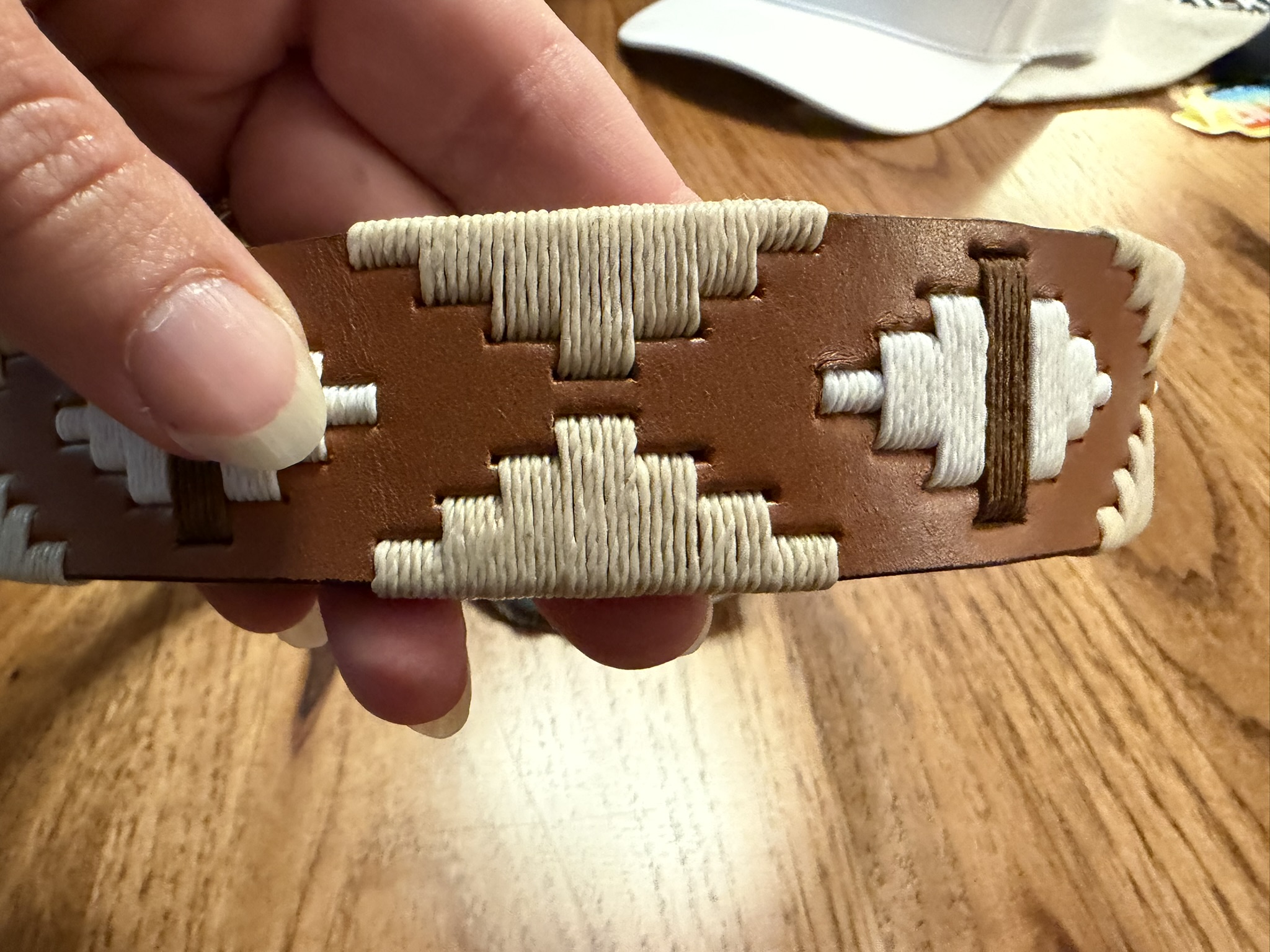
| Embroidered leather | Threadwork adds pattern and color to the leather | Western style with more personality |
| Woven or textile-backed leather | Leather paired with colorful woven material or fabric | A less traditional, more noticeable look |
| Plain leather with Western hardware | Simpler leather with a stronger buckle or metal details | Western style without much decoration |
| Exotic leather | Caiman, ostrich, python, or other textured hides | A dressier or statement-focused belt |
| Interchangeable-buckle belt | A strap designed so the buckle can be removed and replaced | Anyone who owns buckles and/or likes changing the look |
For anyone shopping for the best cowboy style leather belt, the first step is deciding how Western you want the belt to look. From there, the leather, construction, buckle, and fit are a lot easier to compare.
Look at the Leather Before the Decoration
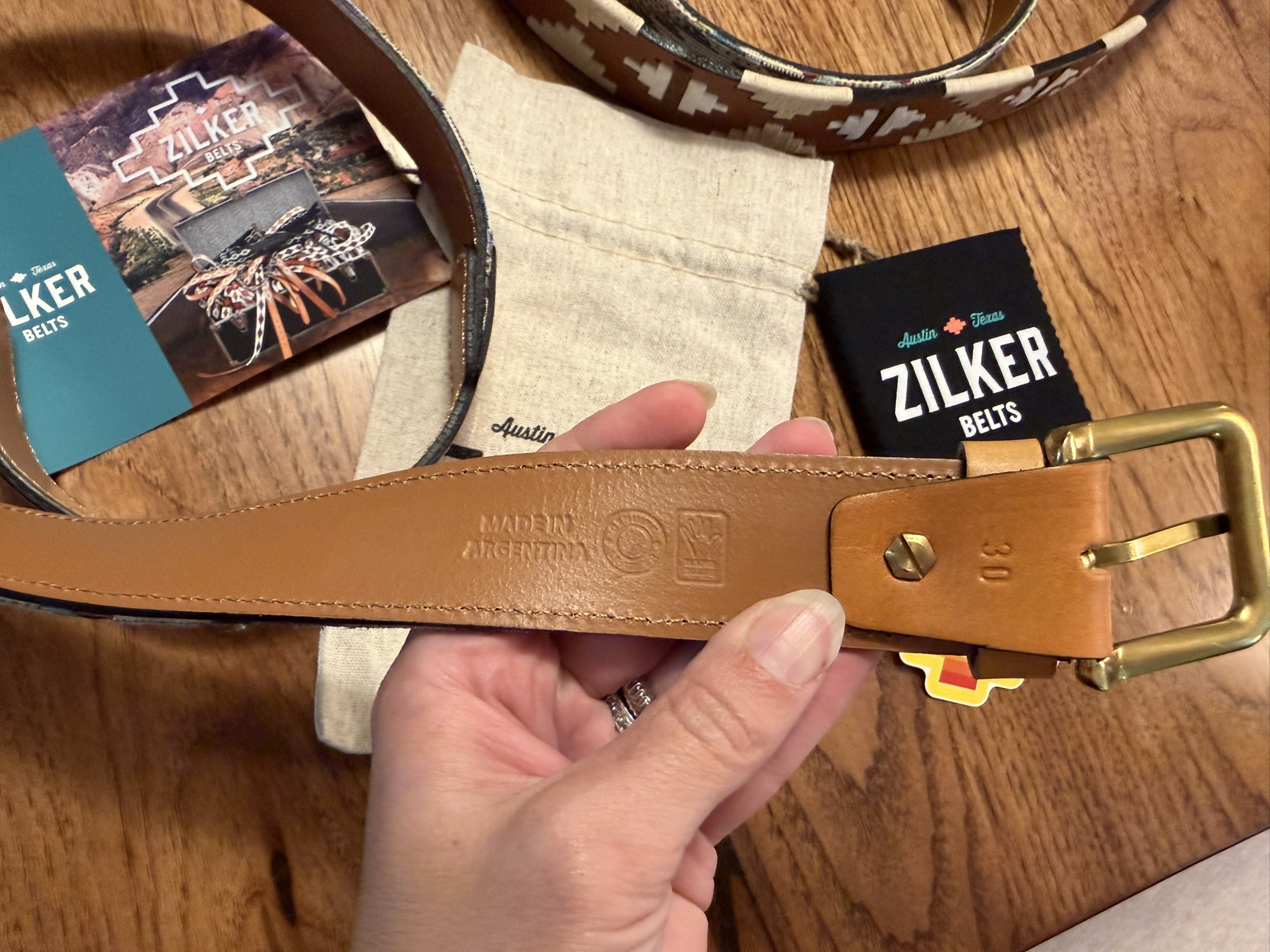
A quick test is to ignore the buckle and decoration for a second and look at the belt strap itself. Check the leather description, the back of the belt, the edges and the areas around the holes, because those are the parts that take repeated wear.
Cowhide is common in Western belts because it can be cut thick enough to hold its shape while still flexing with repeated wear. The surface takes tooling, stitching and embroidery well. Product descriptions vary quite a bit, though. Some brands explain the hide, backing, and construction in detail, while others stop at “genuine leather.”
Here’s the short version of the leather terms you’ll see most often:
| Term | What It Means |
|---|---|
| Full-grain | The natural outer grain remains intact, so scratches, darkening and patina can become part of the surface over time |
| Top-grain | The outer surface has been sanded or corrected for a smoother, more uniform finish |
| Split leather | Made from the lower portion of the hide after the upper layer has been separated |
| Bonded leather | Leather fibers or scraps are combined with binders and formed into a new material |
| Genuine leather | Indicates real leather rather than a specific quality grade; look for more detail about the hide and construction |
Full-grain leather gets plenty of attention because the natural grain remains intact, but I wouldn’t use that label as a shortcut for judging the whole belt. The backing, edge finish, stitching and hardware can have just as much influence on how the belt wears.
You may also see vegetable-tanned or chrome-tanned in product descriptions. Those terms refer to the tanning process rather than a quality ranking. Vegetable-tanned leather is often firmer at first and may develop a more visible patina, while chrome-tanned leather is commonly softer and more flexible from the start.
If you like a firmer strap that changes noticeably over time, vegetable-tanned leather may appeal to you more. If you prefer a belt that feels broken-in sooner, a softer leather may be a better choice.
Another detail to check is whether the belt is lined or unlined. A lining can add structure, cover the rougher underside of the hide, and create a smoother surface against your clothes. An unlined belt can still be excellent, especially if the leather is thick enough on its own, but it will usually feel different in the hand.
For online shopping, look for close-up photos of the edge, backside, holes, and buckle attachment instead of relying on one styled photo through a pair of jeans. Those areas can reveal far more about how the belt was put together.
Look for the Work, Not the Label
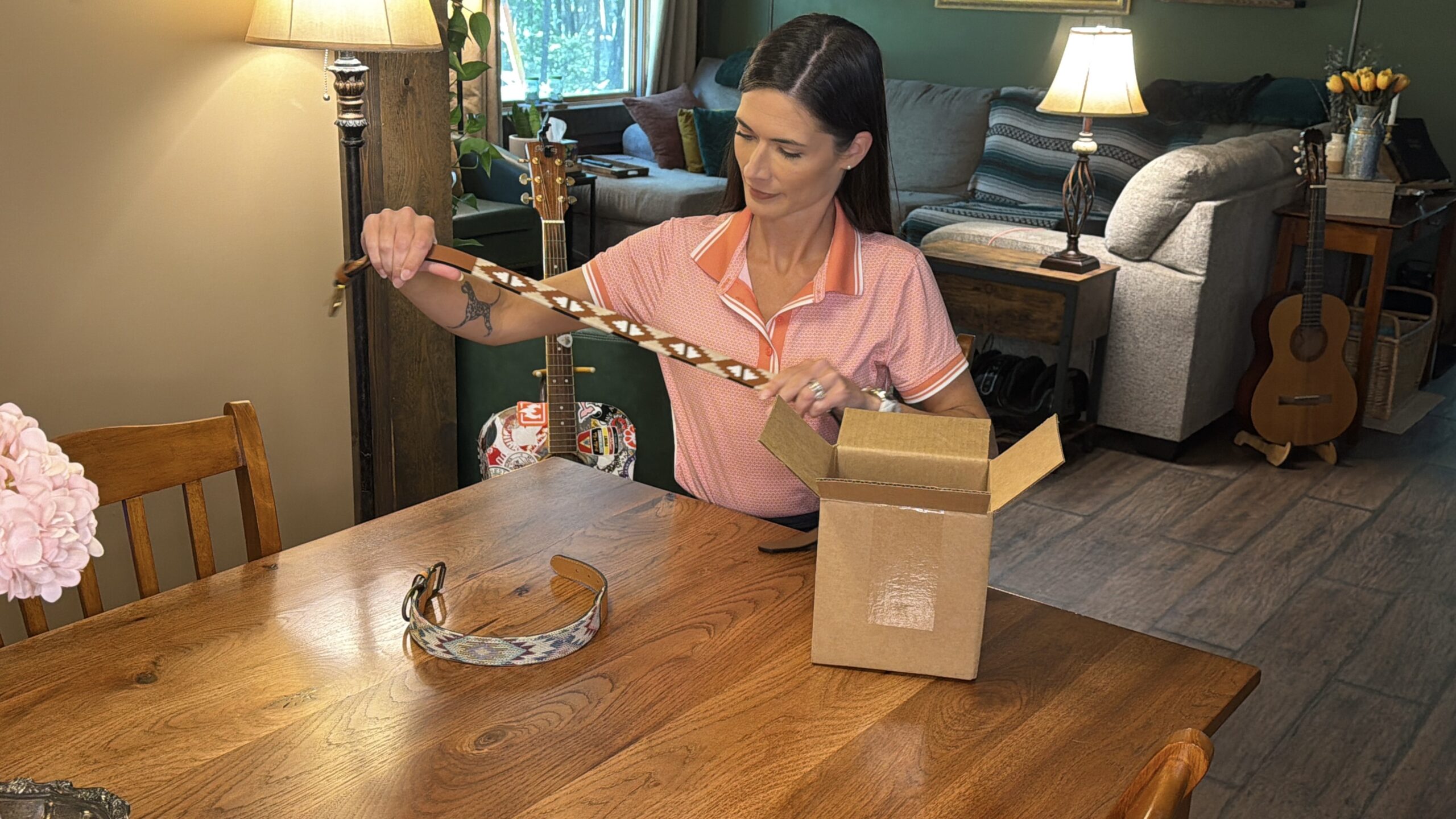
“Handmade” can explain part of a higher price, but the word alone doesn’t guarantee careful construction. If a company is charging more because of handwork, look for where that labor shows up in the finished piece.
That may be hand stitching, embroidery, tooling, woven material, or finishing around the edges and buckle. If the handwork is part of the price, you should be able to point to where it shows up. With stitching and embroidery, look at how it sits against the leather or fabric, whether the lines stay consistent and whether the design looks clean up close.
A few names come up over and over when you start shopping for Western belts, but like with anything, they aren’t all the same.
-
Ariat:
Big Western brand with a wide range of belts, including plenty of tooling, stitching, and heavier hardware.
-
Tecovas:
Usually cleaner and more pared back, especially if you don’t want a lot of tooling or metalwork.
-
Tony Lama:
Best known for boots, with belts that tend to stay close to classic Western leatherwork and decoration.
-
Zilker Belts:
Austin-based, with Argentine influence showing up in several of its belt designs, including colorful stitching and woven styles.
Western Style Doesn’t Have to Be Covered in Tooling
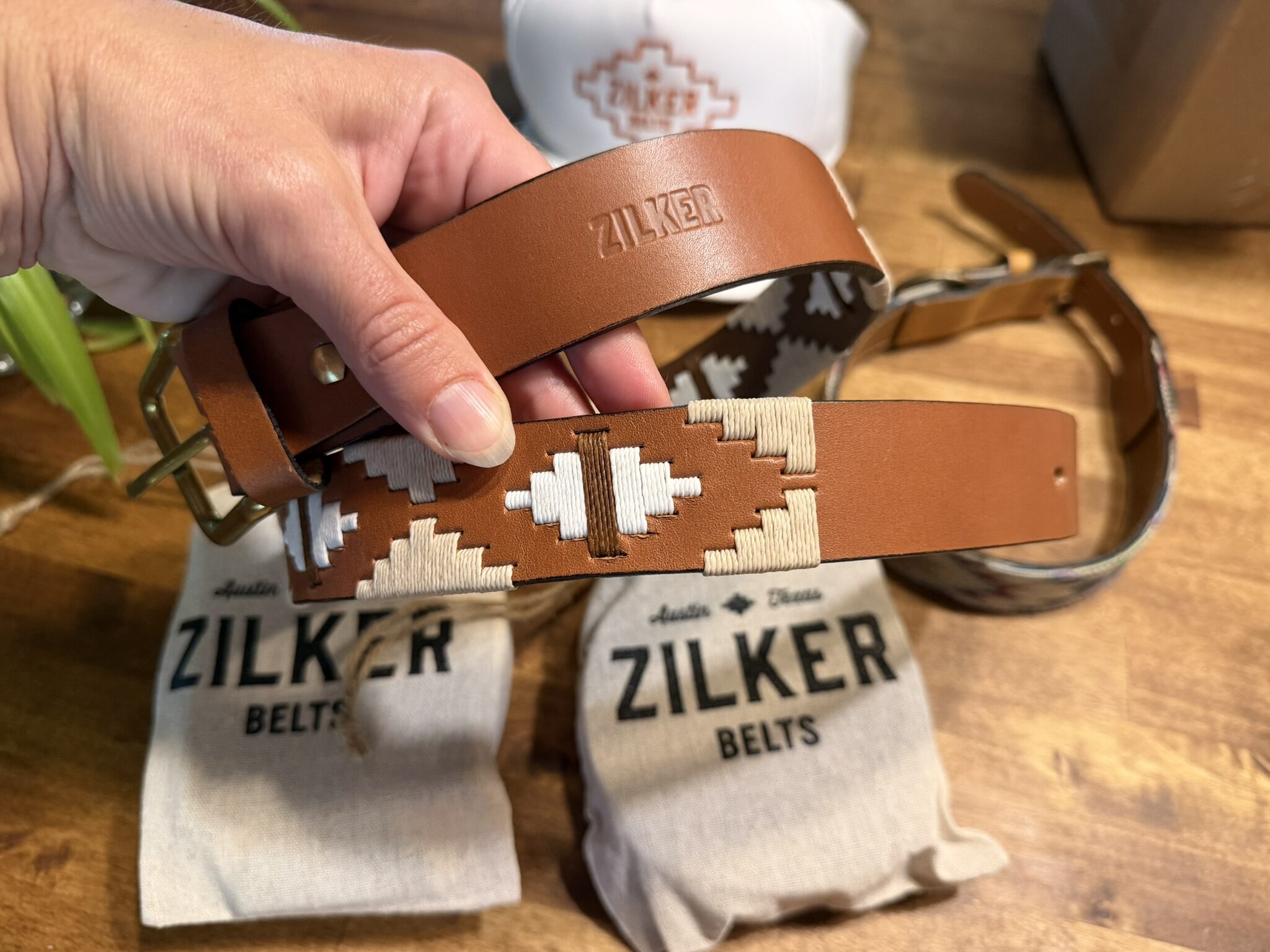
Floral tooling, basket weave patterns, silver hardware, and engraved buckles are some of the most recognizable Western details. Ariat and Tony Lama both have plenty of options in that lane if that’s what you’re after.
There are other ways to get Western character, though. Embroidery, contrast stitching, woven fabrics, and simpler leatherwork can carry the same influence without making the belt the loudest part of the outfit.
Tooled leather usually reads as the most traditional because the pattern is worked directly into the hide. Embroidery can add color without covering the entire strap, while woven textiles bring in pattern and texture that can feel less formal and predictable than tooling.
Exotic hides change the texture as much as the color. Caiman, ostrich, and python can push a belt toward dressier Western wear, but I’d still look at the lining, edge work, and buckle attachment rather than letting the hide itself make the decision for you. A fancy hide can still have poor craftsmanship.
The more decorative the belt, the more likely it is to dictate the rest of what you’re wearing. A highly-tooled or brightly woven belt may be exactly what you want, while a quieter design usually moves between more kinds of outfits.
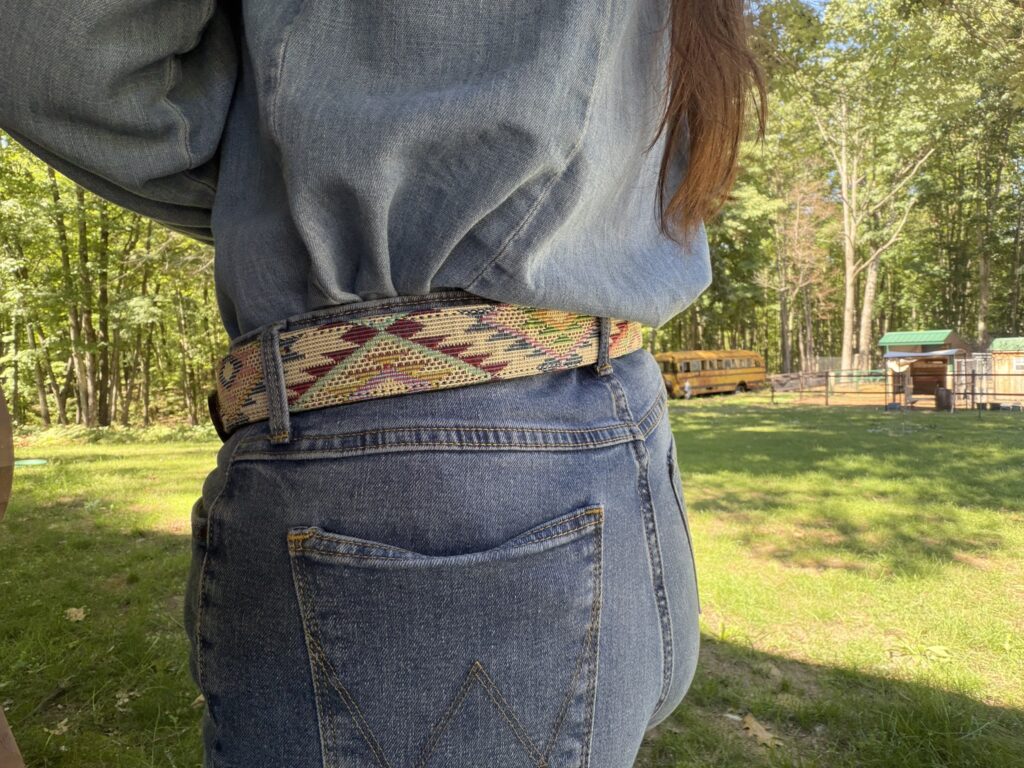
Zilker’s Rancho and Drewski show that difference pretty clearly. Full-grain leather Rancho has embroidery and a removable brass buckle. It can disappear into more outfits and therefore is much more versatile. On the other side of the spectrum, the Drewski uses colorful Argentine fabric backed with leather. It is much more likely to be part of the reason you chose the outfit in the first place.
Check Whether the Buckle Comes Off
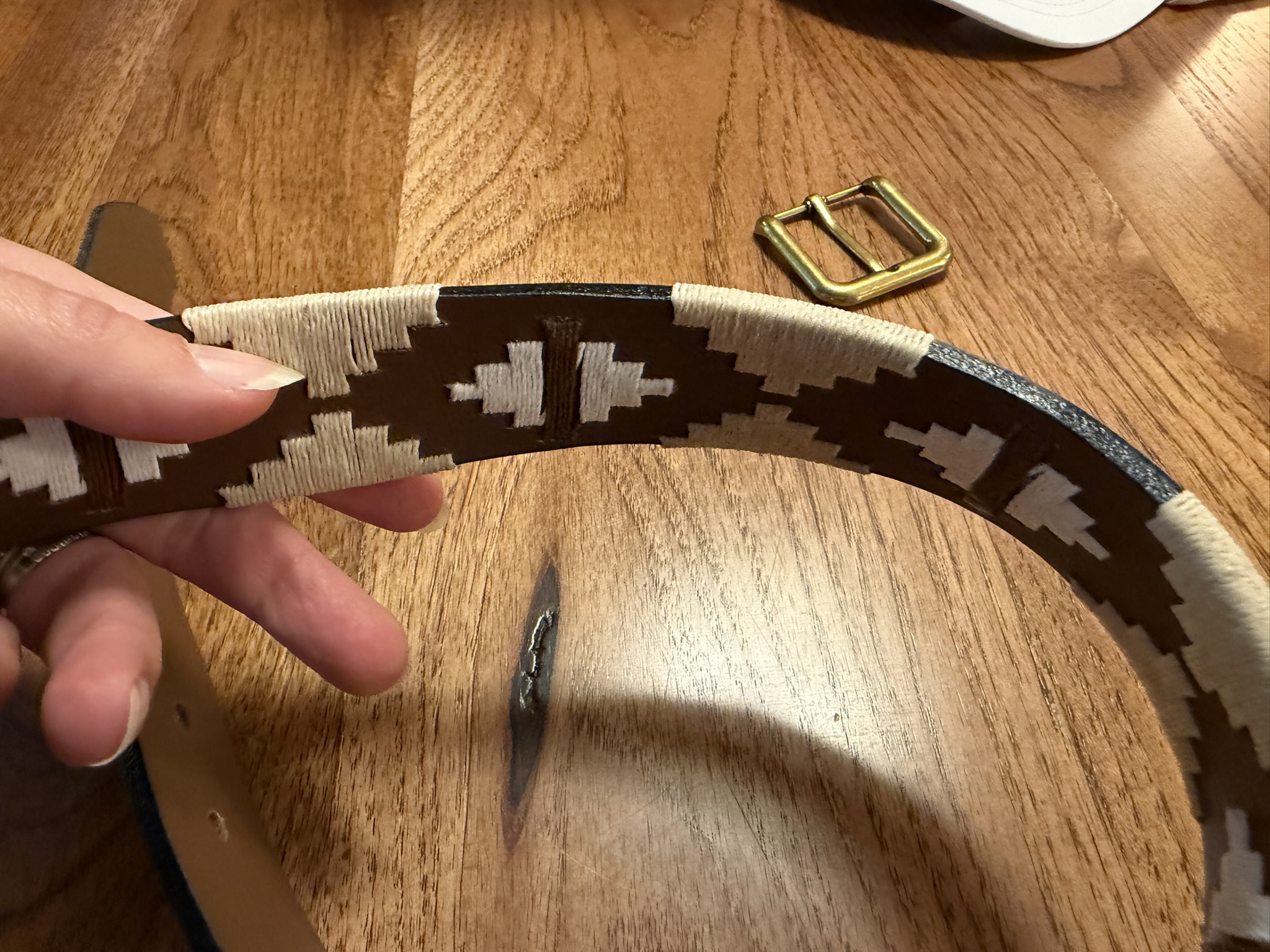
The buckle is easy to overlook when you’re focused on leather and decoration, but the attachment method can change how much use you get from the belt. A removable buckle lets you keep the same strap and swap the hardware depending on what you’re wearing.
That helps if you already own a trophy, vintage, or a sentimental buckle. Even if you never plan to change it, take a look at the snaps, screws, or stitching that hold the buckle in place. The small area is bent and pulled routinely, so is a point of constant tension.
Buckle size also changes how the belt wears. A large Western buckle can look great when standing, but becomes much less comfortable once you sit in a car, lean forward, or spend hours in the saddle. If you have the chance to try the belt on in person, sit down with it before deciding the buckle is comfortable.
When It’s Worth Looking Past the Big Western Names
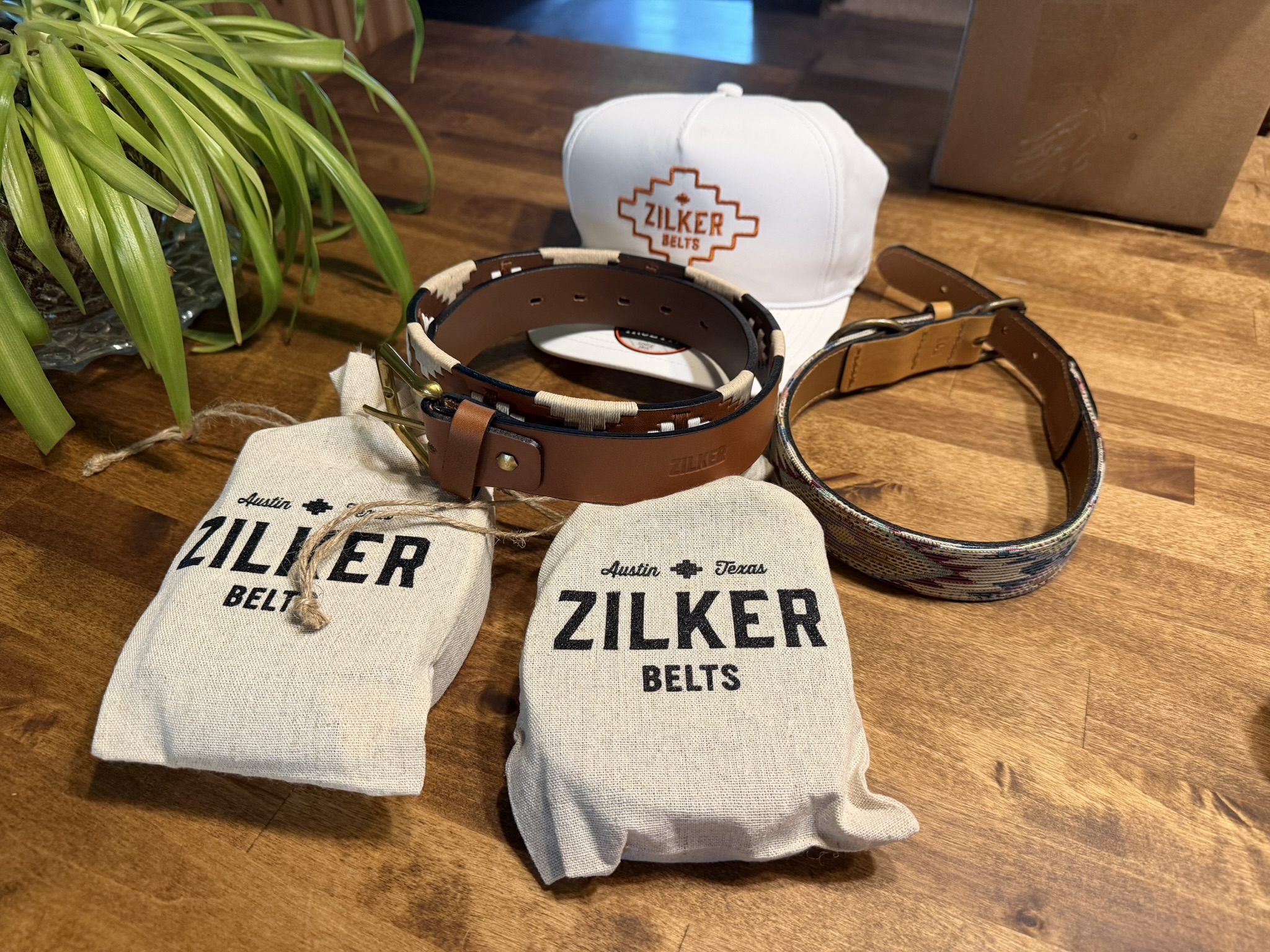
If the design process is part of what you care about, the biggest name in the category may not be the deciding factor. You may be looking for a particular stitching technique, a regional influence, or a pattern with some history behind it rather than another version of the same brown tooled belt.
Several of Zilker’s classic styles are hand-stitched in Buenos Aires, and that craft tradition gives those belts a different look from the usual tooled-cowhide formula. Construction varies by style, so the individual product description is more helpful than assuming everything in the lineup is made the same way.
Some shoppers also care about what a design is connected to. A belt tied to a city, school, music scene, sport, or a particular craft tradition can feel more personal than something chosen only because it matched the boots. This connection can be enough to make one well-made belt more appealing than another.
What Are You Paying For?
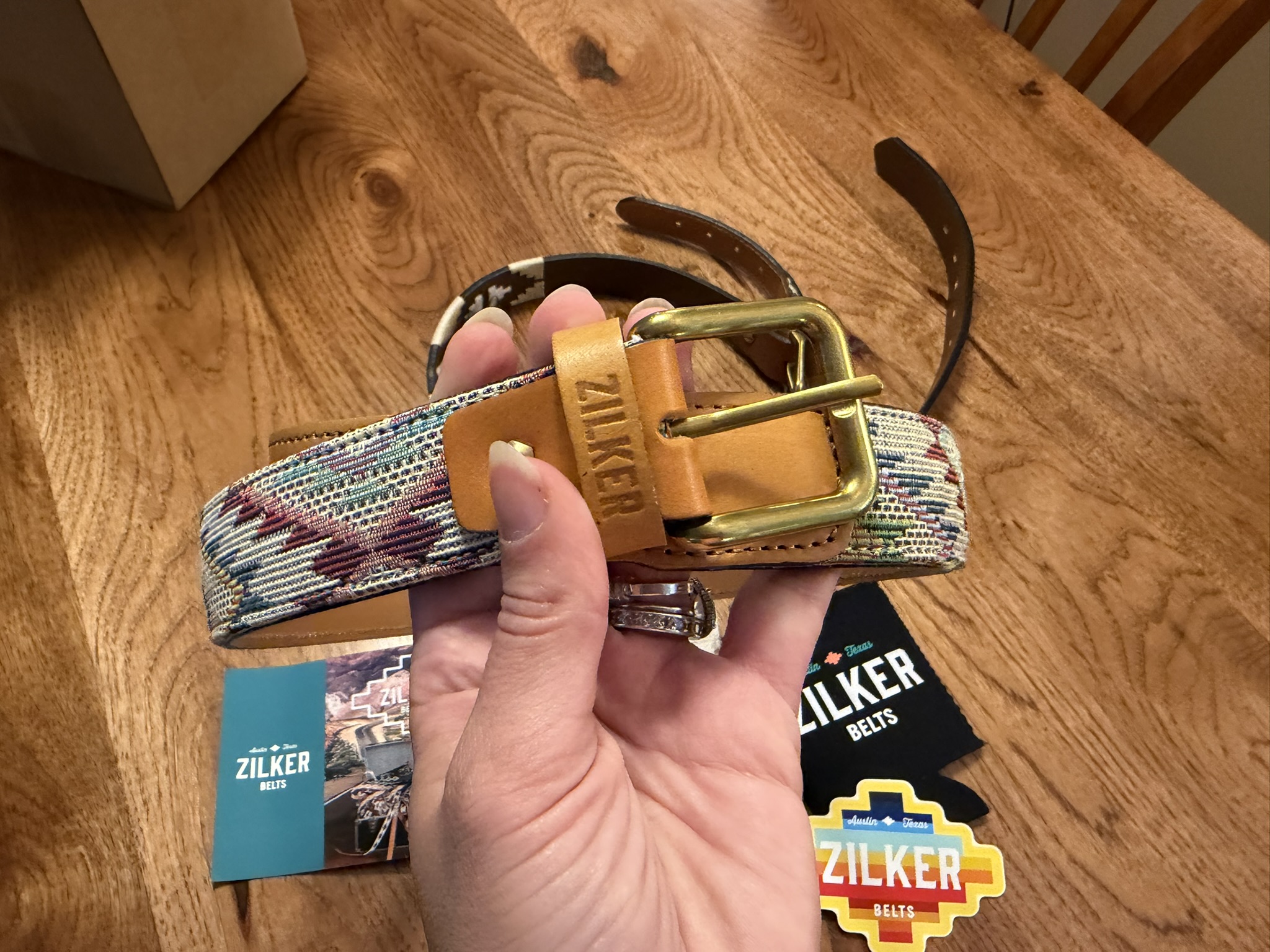
Price can jump quickly in this category, but the extra money doesn’t always go toward the same thing. On an inexpensive mass-market belt, most of the appeal may be getting the look at a lower price. That can be perfectly reasonable if you only wear Western clothes occasionally or like changing belts often.
As prices climb, I’d expect to see more detail about the leather, cleaner finishing, better hardware or more labor in the construction. Hand tooling, embroidery, hand stitching, and woven work all take time, and those are things you can look for rather than relying on price as proof of quality.
Some belts also cost more because of design, identity, or a specific craft tradition. That’s a different purchase from simply finding the thickest possible piece of leather for the least money. If those details are part of why you like the belt, they’re part of what you’re paying for.
Replacement cost belongs in the same conversation. I’ve had inexpensive belts where the outer material began cracking fairly quickly, along with a stretch belt that eventually lost enough elasticity that I had to keep tightening it to get the same fit. I’ve also owned more utilitarian belts that ended up being roughly annual purchases.
After a few replacements, a more expensive belt can start looking less extravagant. A higher price still doesn’t tell you how the belt will look five years from now, so I’d watch what happens as it breaks in.
Leather may soften, darken or crease with wear while the holes, edges and layers stay intact. Peeling, cracking, stretched holes, or separating layers are a different kind of change.
My grandfather’s handmade belt is the example I come back to because it shows what old leather can look like when it has aged well. It has softened and shows years of use, but it still looks like a belt you would keep rather than something headed for the trash.
Get the Size Right Before You Blame the Belt
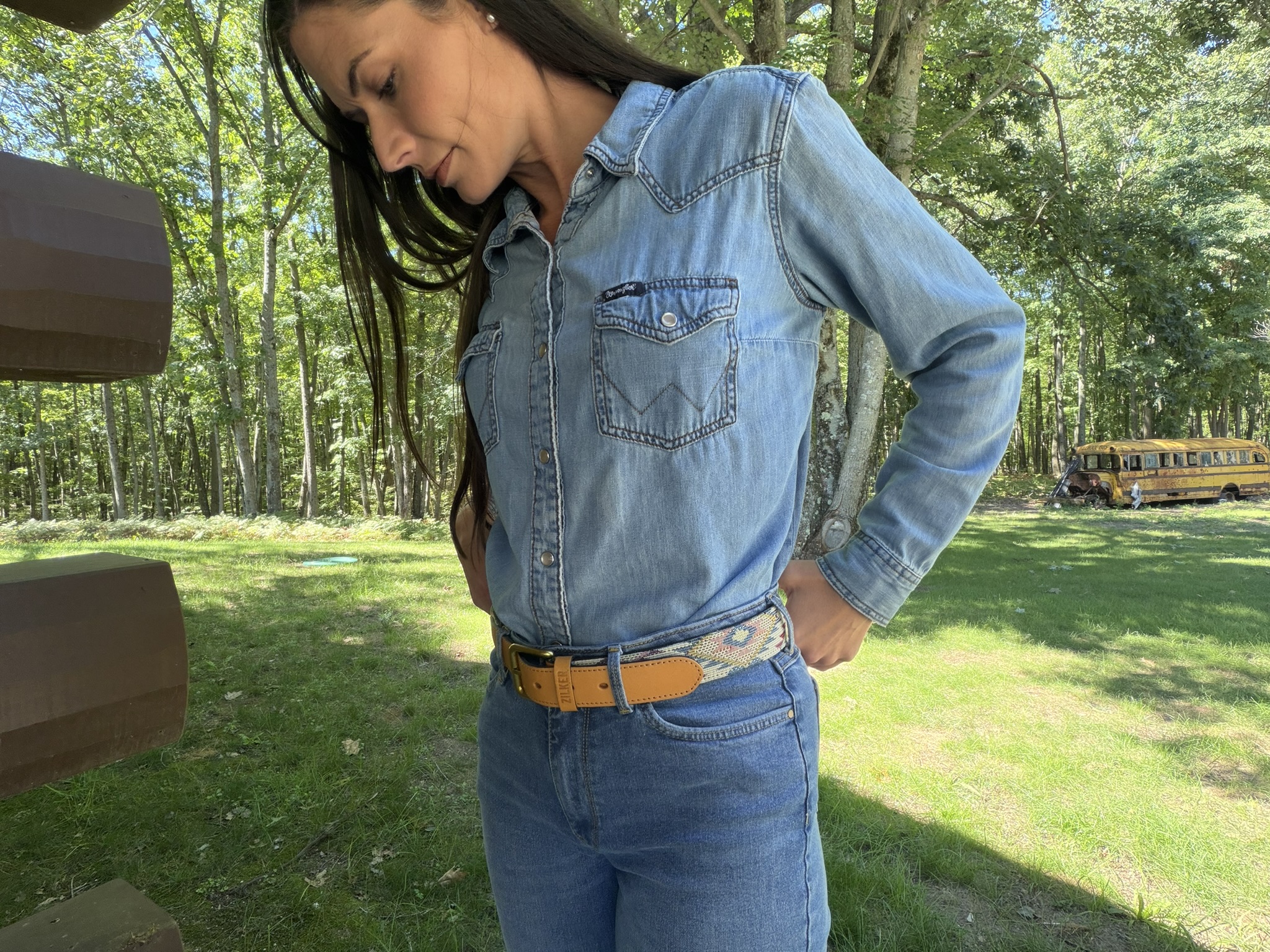
Belt sizing can be confusing because your pants size and belt size are not always the same. The most reliable starting point is to measure a belt you already own and like rather than guessing from your pants.
Lay the belt flat and measure from the point where the buckle pin meets the buckle to the hole you use most often. That measurement gives you a number you can compare against the brand’s sizing chart.
If you don’t have a belt that fits well, run a soft measuring tape through the belt loops of the pants you plan to wear most often and measure where the belt will sit. Keep the tape comfortably snug rather than pulling it tight.
For example, I measure about 28 inches where I normally wear mine, and a size 30 puts me near the middle holes. That’s the fit I prefer because I still have a little room to tighten or loosen the belt.
Try to land near the middle hole when you choose a size, especially if you wear pants with different rises. Width deserves a quick check too. Around 1.5 inches is common for Western belts, but some pants have narrower loops, so measure those before ordering. You don’t want to buy a belt you love, only to find out the belt is too wide for the loops.
Use Your Closet as the Final Test
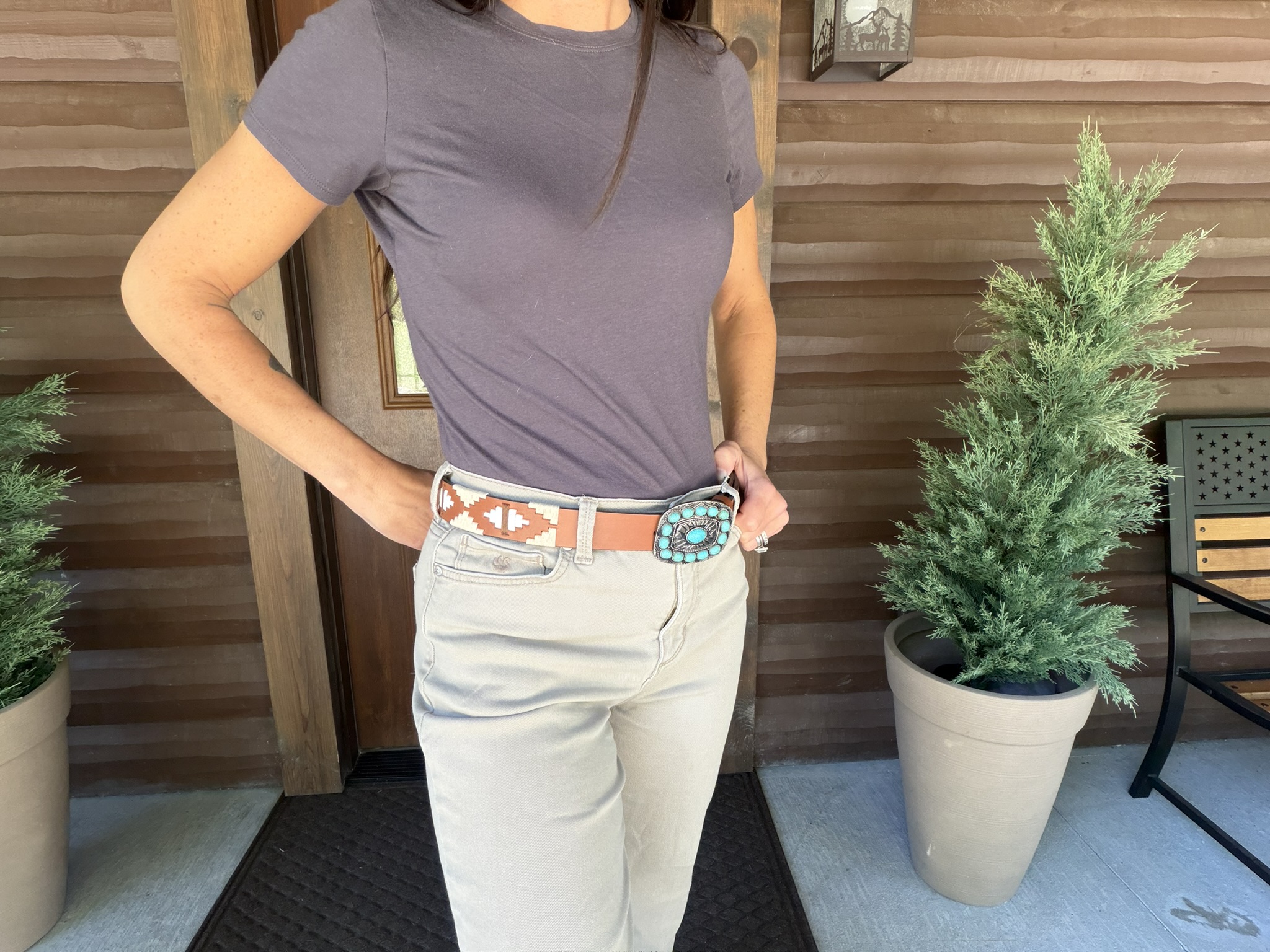
Before ordering a belt with a strong design, picture three outfits you already own. That is a better test than imagining the perfect pair of boots or jacket you might buy later.
Try one obvious Western outfit and then two that aren’t. For example, jeans and boots, shorts and a polo, and something you’d wear out to dinner. If the belt works with all three, you’re far more likely to use it regularly.
Highly decorated belts can be deceptive because they often look great by themselves. Once you get them home, the rest of your closet has to cooperate.
What I’d Look For Before Buying
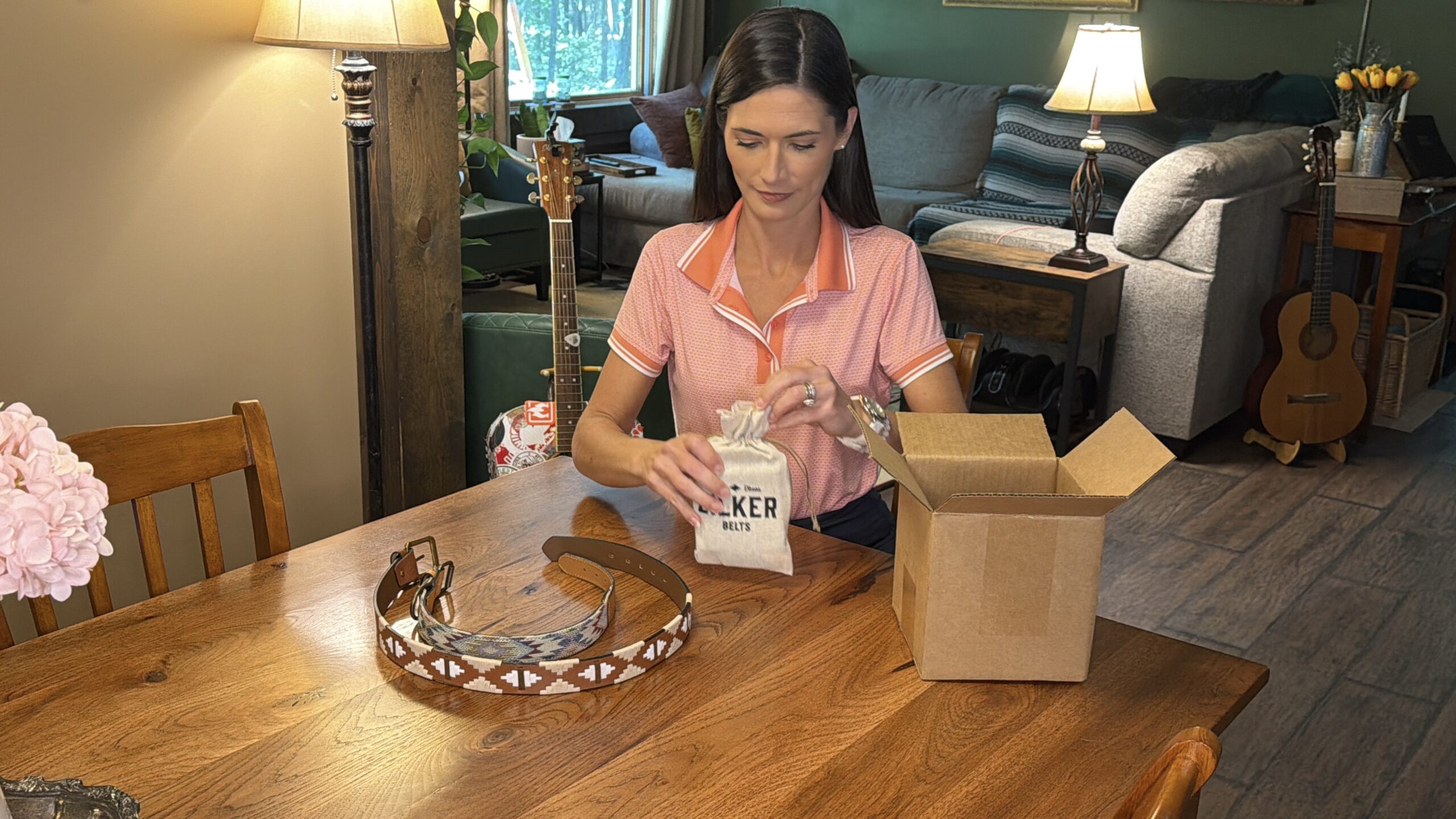
If I were buying another cowboy-style belt tomorrow, I’d ask myself whether I liked the belt or whether I could actually see myself wearing it. Those are not always the same thing.
I’d rather buy the one I can wear next weekend with clothes I already own than the one that looks amazing online and needs three new pieces before it leaves the closet. Or at least my husband would prefer that!